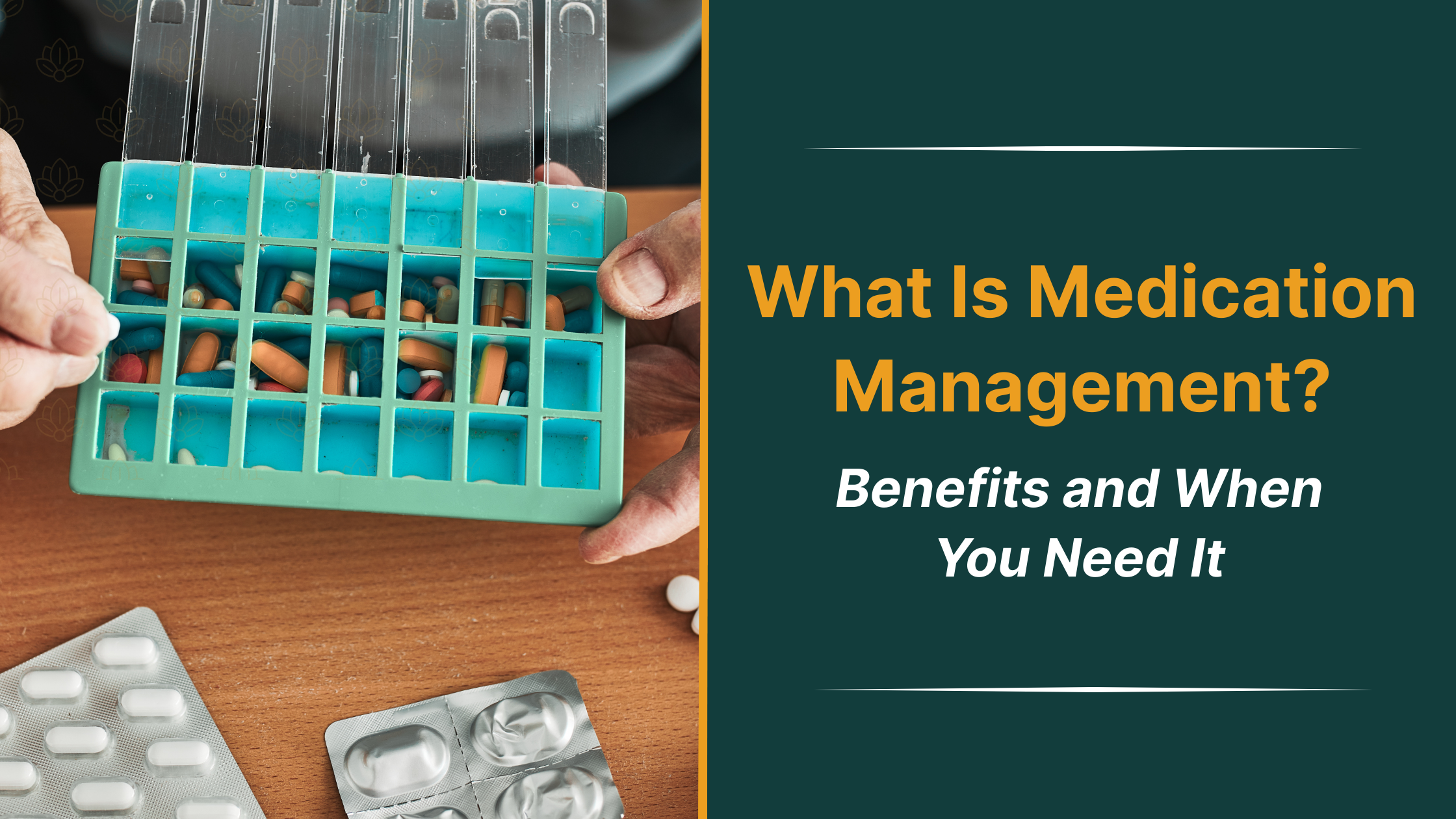
Medications play a powerful role in healing. They help manage symptoms, treat chronic conditions, and support mental health, but keeping track of them all can sometimes feel like a lot. If you’ve ever wondered whether you’re taking the right dose, at the right time, or if everything is working as it should, you’re not alone.
That’s where med management comes in, a supportive and proactive way to make sure your treatment is working for you, not against you.
Let’s explore what medication management really means, why it’s important, and how it can help you or your loved ones feel more in control of your health.
What Is Medication Management?
Put simply, medication management is a collaborative process between you and your healthcare provider to ensure all your medications are being used safely and effectively. It involves reviewing, organizing, and optimizing your medications so that they support your health goals, without causing unnecessary side effects or complications.
This process may be handled by psychiatrists, primary care physicians, or pharmacists and often includes:
- Checking for possible drug interactions
- Reviewing all current prescriptions, over-the-counter medications, and supplements
- Clarifying instructions, dosages, and timing
- Identifying any behaviors that could affect medication use (like skipping doses or doubling up)
Think of it as a personalized plan that keeps your medications, and your well-being, on track.
Why Medication Management Matters
Medications are most effective when taken properly and consistently. For people managing mental health conditions, chronic illnesses, or multiple prescriptions (a situation known as polypharmacy), medication management becomes even more essential.
Effective meds management is a crucial aspect of healthcare, especially when you’re dealing with complex regimens. It ensures your medications are working as intended and significantly reduces the risk of adverse drug events. Here are the benefits of medication management:
Reduces Errors and Adverse Drug Events
By reviewing your medication list regularly, your provider can catch potential risks early, like incorrect dosages or unsafe combinations, before they become serious.
Improves Treatment Outcomes
When your medications are optimized, they’re more likely to work as they should. That means better symptom control, fewer flare-ups, and improved quality of life.
Boosts Medication Adherence
Sometimes, it’s easy to forget a dose, or feel unsure if it’s even helping. Medication management supports you with reminders, simplified routines, or tools like pill organizers to make staying consistent easier.
Lowers Healthcare Costs
Avoiding complications or hospital visits caused by medication mishaps can lead to significant savings, both financially and emotionally.
Provides Peace of Mind
Knowing that a professional is keeping an eye on all your medications takes the pressure off you (and your caregivers). It’s one less thing to worry about.
When Do You Need Medication Management?
You don’t have to wait for something to go wrong. Medication management is useful at any stage, but especially helpful if:
- You take multiple medications daily
- You’re noticing side effects or unsure about how certain medications interact
- You’re managing a mental health condition like depression, anxiety, or bipolar disorder
- Your prescriptions or dosages have recently changed
- You’re transitioning between providers or recovering from a hospital stay
- You’re struggling to remember doses or follow instructions
Mental health treatment often includes medications to help ease symptoms, and medication management ensures they’re doing their job effectively and safely. Whether it’s antidepressants, mood stabilizers, or ADHD medication, managing them with care makes all the difference.
What to Expect During a Medication Management Session
A session typically starts with an open conversation about your current medications, including prescribed, over-the-counter, and any supplements you take. From there, your provider will:
- Review the effectiveness of each medication
- Discuss any side effects or challenges you’re facing
- Make any needed changes based on your symptoms, lifestyle, and goals
You’ll leave with a clear, easy-to-follow plan, along with the support you need to stick with it.
The Future of Medication Management
Medication management is evolving alongside technology, and that’s a good thing. From smart pillboxes to mobile apps, new tools are making it easier than ever to stay on track with your treatment.
One exciting development? Many of these apps now connect directly to your electronic medical records. That means your care team can stay in the loop, send refill reminders, and make timely adjustments when needed.
That said, the future of medication management isn’t just about tech, it’s about treating the whole person. So be sure to share any supplements, vitamins, or over-the-counter remedies you’re taking. The more your providers know, the better they can support your health in a way that feels truly complete.
Final Thoughts: Medication Can Be a Tool, Not a Burden
Managing medications doesn’t have to feel overwhelming. With the right guidance, it becomes a supportive part of your healing, not a confusing one.
If you’re navigating multiple prescriptions, supporting a loved one with their routine, or simply want to make sure your treatment plan is the best it can be, medication management services is worth exploring.
Need professional help to get started? Consider connecting with a healthcare provider who offers personalized medication support. Dr. Barbara Fontane’s practice is one such place where thoughtful, patient-centered care is at the heart of every treatment plan.
Because when your medication is managed well, you feel empowered to live well. And that’s what truly matters.