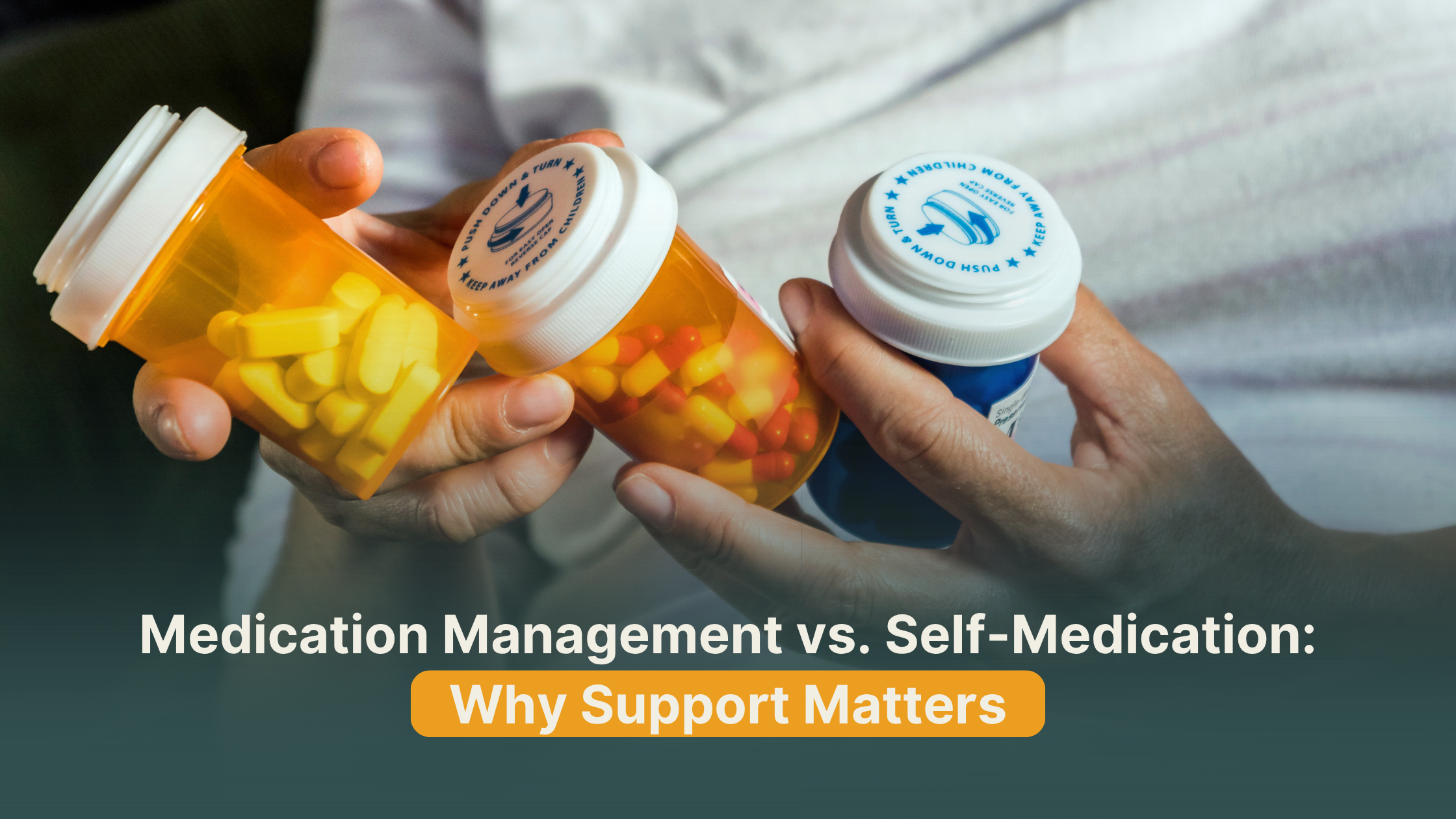
When it comes to mental health, medication can be both a lifeline and a challenge. Finding the right balance takes time, patience, and professional guidance. Yet, many people try to manage it alone, adjusting doses, skipping prescriptions, or experimenting with new drugs without medical supervision. This growing habit of self-medication might seem harmless at first, but it can quickly spiral into something risky.
Let’s explore why professional support in medication management makes all the difference, and how the right guidance can help you feel more stable, supported, and in control of your mental health journey.
What Is Medication Management?
Medication management is a structured, ongoing process led by a qualified psychiatrist or mental health professional. It focuses on prescribing, monitoring, and adjusting psychiatric medications to ensure they work safely and effectively for you.
Unlike a one-time prescription, it’s a collaborative approach, one where your provider checks in regularly, reviews your progress, and helps fine-tune your treatment based on your unique needs.
For example, if you search for psychiatry near me and visit a licensed provider, they’ll begin by assessing your full medical and emotional history. They’ll ask about previous medications, possible side effects, and how you’ve been coping day to day. This allows them to design a treatment plan that aligns with your goals and lifestyle.
Over time, they’ll continue to monitor how the medication affects your mood, sleep, and energy levels, making thoughtful adjustments as needed. This process highlights many of the benefits of medication management, from improved consistency to reduced stress about treatment changes, that help patients maintain balance and stability.
The Role of Psychiatric Medication
Psychiatric medication can play a key role in treating conditions like depression, anxiety, bipolar disorder, and ADHD. However, finding the right dosage and combination often takes time. This is where consistent oversight becomes essential.
Some medications take weeks to show results, while others may cause side effects that need to be managed carefully. Without professional input, these nuances can easily be missed, leading to unnecessary discomfort or even health risks.
Think of your psychiatrist as your treatment partner, someone who helps you understand how your mental health medication interacts with your body, lifestyle, and other prescriptions. This professional guidance ensures your care stays balanced and safe.
When handled through expert oversight, medication management also supports long-term stability and improved outcomes, emphasizing the role of medication management in long-term mental health treatment, where consistent monitoring helps prevent relapse and sustain progress.
Why People Turn to Self-Medication
Self-medication often begins with good intentions. Maybe you’ve noticed your medication isn’t working as well as it used to. Or perhaps you’ve missed an appointment and decided to “adjust things a little” on your own.
Sometimes, people rely on over-the-counter substances, herbal supplements, or alcohol to cope with stress, anxiety, or insomnia. But without professional input, it’s easy to underestimate how these substances might interact with prescribed medications.
What starts as small, temporary changes can create long-term complications, from worsening symptoms to increased dependency or withdrawal issues.
The Hidden Risks of Self-Medication
While it may seem like a shortcut, self-medication can lead to:
- Incorrect dosing: Too much or too little of a medication can make symptoms worse or trigger new side effects.
- Dangerous interactions: Combining prescriptions with unapproved substances or other medications can cause unpredictable reactions.
- Delayed recovery: Without proper monitoring, it’s difficult to know whether your medication is truly effective.
- Emotional setbacks: Experimenting on your own can create unnecessary stress or confusion about what’s really working.
A structured medication therapy plan prevents these issues by keeping your treatment consistent and medically sound.
How a Psychiatrist for Medication Management Helps?
A psychiatrist for medication management doesn’t just prescribe medication, they help you understand it. Their role involves reviewing your full history, identifying potential risks, and providing ongoing support.
Here’s what that process typically includes:
- Comprehensive evaluation: Reviewing your medical background, symptoms, and goals.
- Personalized treatment planning: Matching the right medication to your individual chemistry.
- Ongoing adjustments: Modifying dosages or medications as your needs evolve.
- Collaborative care: Coordinating with your therapist or primary care doctor for a unified approach.
This structured process, known as medication management psychiatry, allows patients to feel confident that every detail of their treatment is backed by expertise, safety, and empathy.
Medication Management vs Self-Medication: The Core Difference
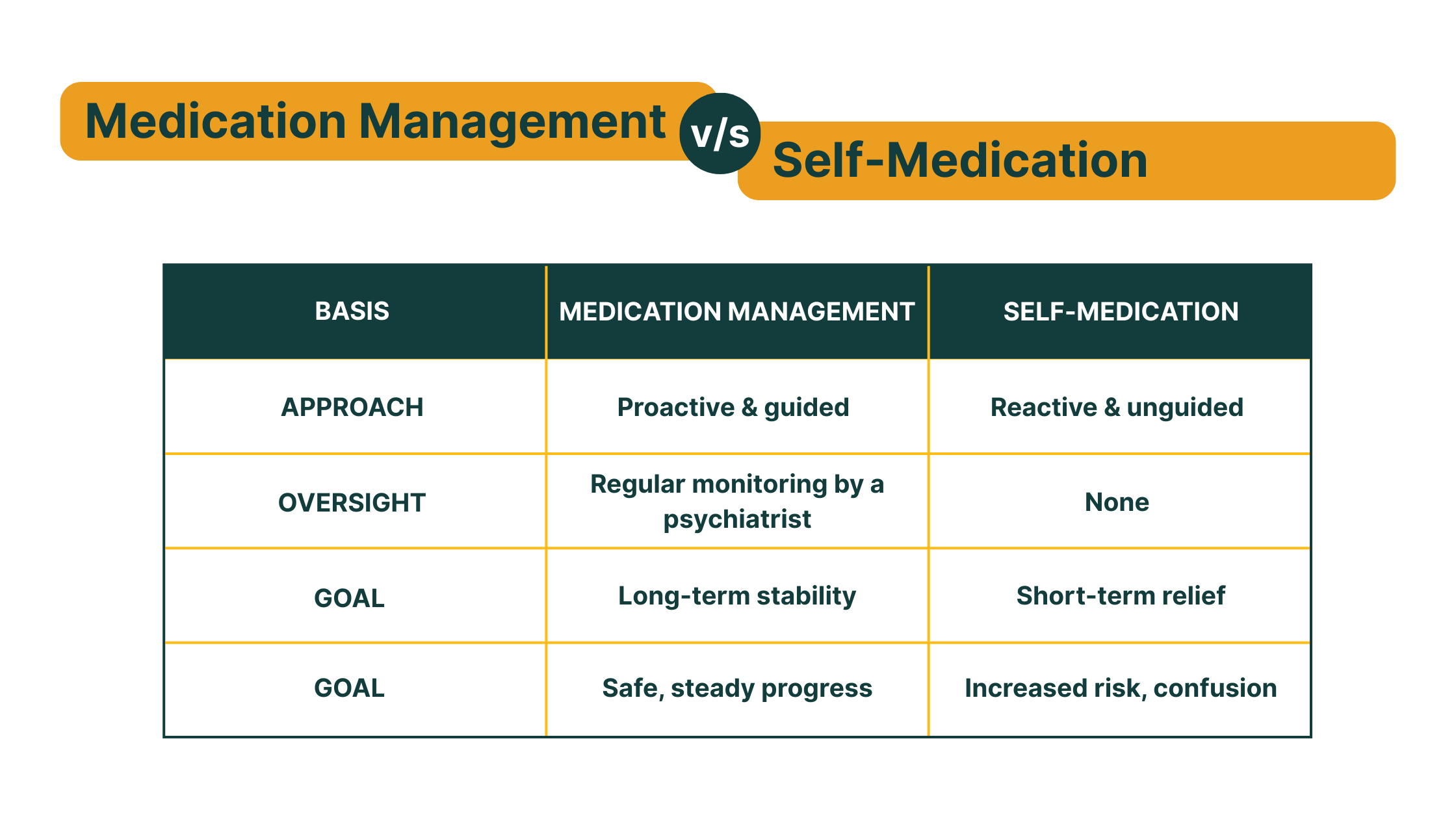
At its heart, medication management vs self-medication is about trust. Trusting science, trusting your care provider, and trusting the process.
Self-medication is reactive. It’s based on short-term fixes and personal guesses. Medication management, on the other hand, is proactive. It’s built on ongoing communication, professional monitoring, and data-backed adjustments that support long-term stability.
The difference between the two is not restricted to being clinical; rather, it is more emotional. Patients working under professional care often describe feeling more grounded and less anxious about their treatment. They know someone is keeping track, ensuring that their medications are helping, not hindering, their growth.
Why Professional Support Truly Matters
Your mental health deserves structure, compassion, and expertise. Having a psychiatrist oversee your medications means:
- You’re less likely to miss doses or fall behind on refills.
- You’ll have professional guidance to manage side effects.
- You’ll receive consistent feedback to measure progress.
- You’ll gain peace of mind knowing your treatment is tailored to you.
When you’re working with a trusted provider, medication becomes a tool for healing, not a source of worry.
Final Thoughts
Choosing professional support isn’t a sign of dependency; it’s an act of self-respect. The right psychiatrist doesn’t just manage your prescriptions; they help you rebuild confidence in your body, your emotions, and your future.
If you’ve been struggling to find the right balance, or if self-adjusting your medications has left you feeling uncertain, it might be time to seek expert guidance. Professional support can help you stay consistent, safe, and on track with your wellness goals.
Your journey toward emotional stability doesn’t have to be a guessing game. Schedule your consultation today to experience the benefits of personalized medication management, where every step of your care is designed with you in mind.