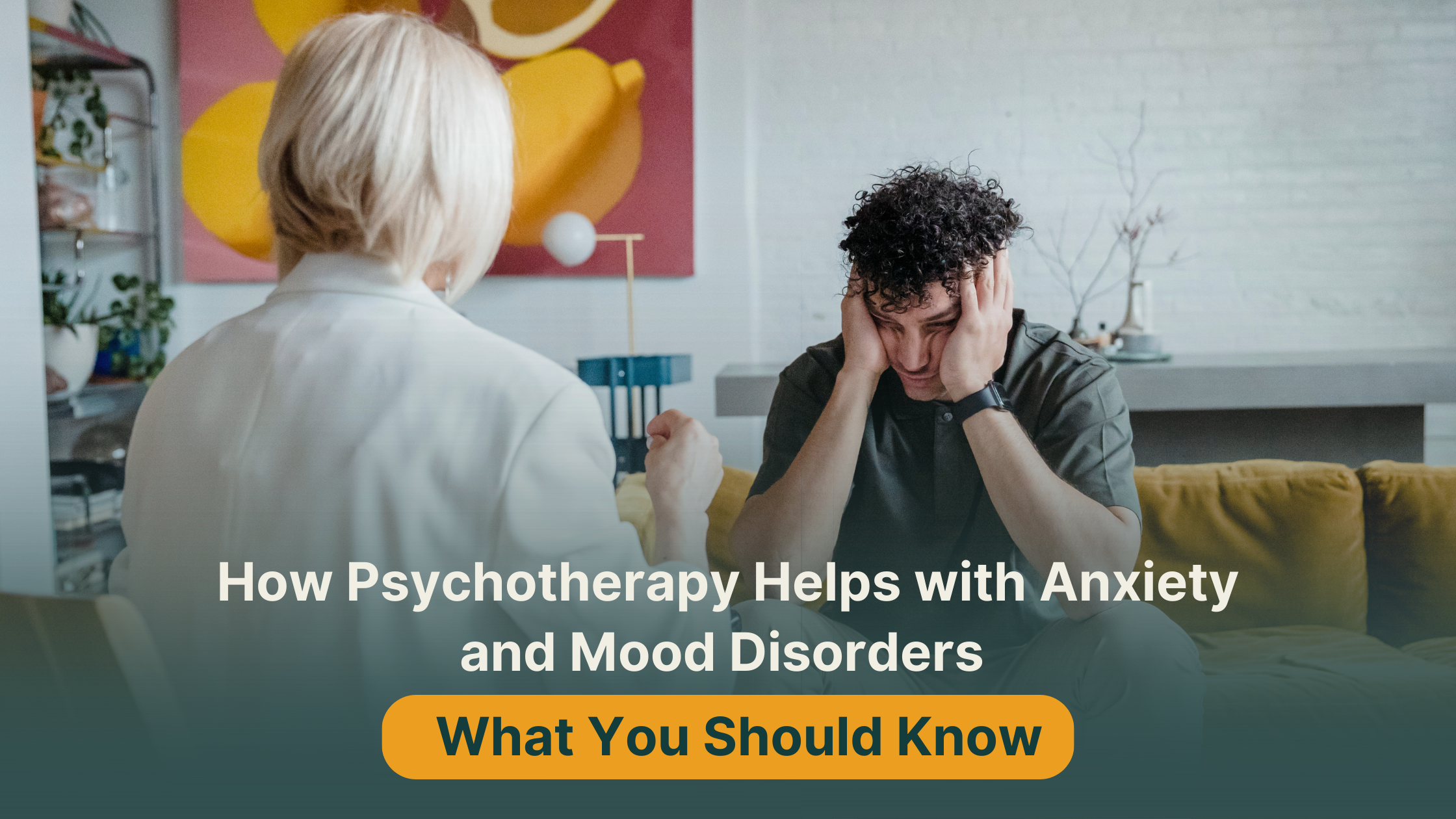
If you’ve ever found yourself caught in a loop of anxious thoughts, persistent sadness, or emotional ups and downs that feel hard to explain, you’re not alone. Anxiety and mood disorders are more common than many people realize, and they don’t discriminate. They can affect anyone, regardless of age, background, or life circumstance.
The good news? You don’t have to navigate it on your own. With the right support, healing is within reach. One of the most compassionate and effective ways to begin that journey is through psychotherapy.
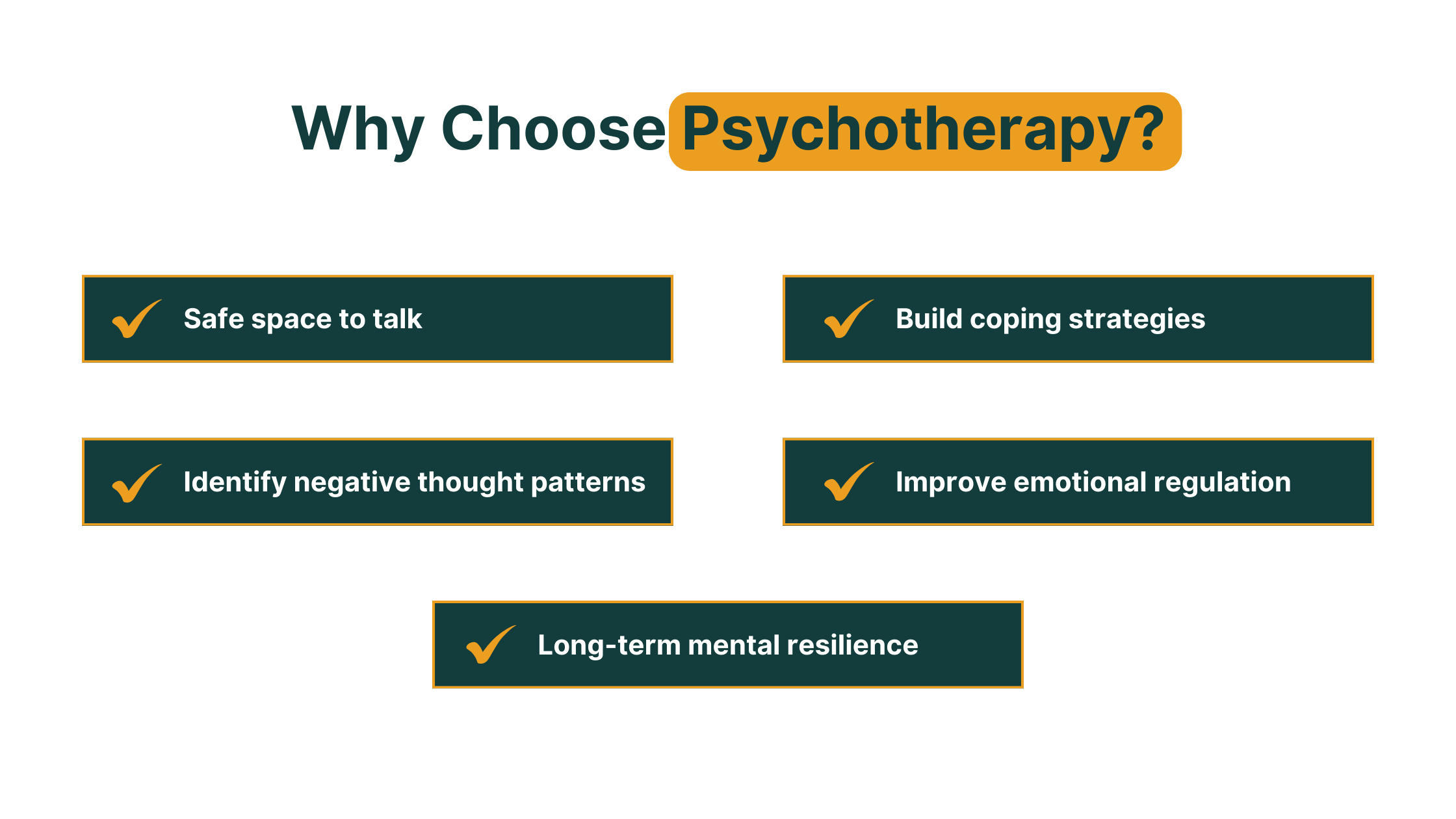
Psychotherapy is about being truly heard. It creates a safe space where you can explore your thoughts, feelings, and behaviors without judgment. It gives you tools to cope, space to reflect, and strategies to move forward with more clarity and confidence.
In this blog, we’ll walk you through how psychotherapy works, the different types available for anxiety and mood disorders, and how to take that important first step toward support that truly meets you where you are.
Understanding Anxiety and Mood Disorders
Anxiety and mood disorders are among the most common mental health conditions, affecting millions worldwide. Anxiety disorders often include persistent worry, restlessness, irritability, or physical symptoms like fatigue and sleep issues. Mood disorders, like depression or bipolar disorder, can bring feelings of hopelessness, mood swings, or loss of interest in daily life.
These symptoms can impact work, relationships, self-esteem, and overall well-being. But the earlier you seek support, the better your chances of managing symptoms and regaining control.
What Is Psychotherapy and How Does It Help?
Psychotherapy, also known as talk therapy, is a collaborative process between you and a trained mental health professional. Together, you work through patterns of thought, emotion, and behavior that may be contributing to distress.
Rather than offering quick fixes, psychotherapy creates space to explore root causes, build emotional regulation skills, and reshape your perspective in a safe and non-judgmental setting. Over time, psychotherapy for anxiety and mood-related conditions helps individuals shift from reactive patterns to intentional responses, leading to long-lasting mental resilience.
Types of Psychotherapy for Anxiety and Mood Disorders
There’s no one-size-fits-all approach to therapy. Different types of psychotherapy for anxiety and mood disorders are used depending on individual needs, symptoms, and goals. Some of the most effective, research-backed approaches include:
- Cognitive Behavioral Therapy for Anxiety (CBT): A structured and goal-oriented method that helps individuals identify and challenge unhelpful thoughts and behaviors. CBT is widely considered the gold standard in anxiety and mood disorder treatment.
- Dialectical Behavior Therapy (DBT): Particularly helpful for people experiencing intense emotional swings, DBT combines mindfulness practices with skills for managing distress and improving relationships.
- Interpersonal Therapy (IPT): Focused on improving communication and resolving interpersonal conflicts, especially helpful for individuals with depression or social anxiety.
- Psychodynamic Therapy: A deeper approach that explores unresolved past experiences and unconscious patterns influencing current behavior.
The best therapy for mood disorders often depends on your specific symptoms, emotional history, and preferences. A good therapist will help tailor the right approach for your situation.
What to Expect in Mental Health Therapy Sessions
Walking into your first mental health therapy session can feel intimidating, but knowing what to expect makes it easier.
- Structure: Most sessions last between 45–60 minutes and occur weekly or biweekly. Early sessions often focus on building rapport, identifying goals, and understanding your story.
- Format: Sessions can be in-person, virtual, or a hybrid of both. What matters most is consistency and a sense of safety.
- Client and Therapist Roles: The therapist provides guidance, perspective, and tools, while you bring your lived experience and insight. It’s a collaborative process, no one is expected to have it all figured out.
Therapy isn’t a linear journey. Progress may feel slow at times, but every conversation builds a foundation for deeper self-awareness and healing.
Psychotherapy vs Medication for Anxiety: Which Is Better?
A common question people ask is: Should I choose psychotherapy vs medication for anxiety? The answer depends on your unique experience.
- Psychotherapy alone is often highly effective, especially for mild to moderate symptoms. It offers long-term benefits without side effects.
- Medication may be recommended when symptoms are more severe or when therapy alone doesn’t provide sufficient relief. Antidepressants or anti-anxiety medications can offer short-term symptom control.
Many people find success with a combined approach, using both medication and talk therapy. This combination can offer both immediate symptom relief and long-term coping tools, especially in comprehensive anxiety and mood disorder treatment plans.
Choosing the Right Therapist or Treatment Approach
Finding the right therapist is a key step. Here’s how to start:
- Look for credentials: Make sure your therapist is licensed and experienced in treating anxiety and mood disorders.
- Match your needs: If you’re struggling with racing thoughts, cognitive behavioral therapy for anxiety might be the right fit. If your concern is deep-rooted emotional pain, psychodynamic therapy may help.
- Ask questions: In your first session, ask about the therapist’s approach, past client outcomes, and how they measure progress.
Final Thoughts
There’s no shame in needing help. In fact, seeking therapy is one of the bravest steps you can take toward understanding yourself and building a more balanced life. Whether you’re navigating anxiety, depression, or mood shifts, support is within reach, and it starts with a conversation.
At bfontanemd.com, we believe therapy should feel accessible, affirming, and effective. Our approach to psychotherapy for mood disorders and anxiety conditions is grounded in evidence-based practices and personalized care. Whether you’re exploring therapy for anxiety and depression for the first time or returning to treatment, know that your path to clarity and confidence begins here.