Anxiety has a way of sneaking into daily life. It might appear as sleepless nights, a racing heart before an ordinary task, or constant second-guessing over small decisions. At first, these moments can seem like ordinary stress. Over time, though, they may point to something more significant: the early signs of anxiety.
Because anxiety develops gradually, it can be easy to miss the first indicators. Some people notice constant worrying that feels hard to control. Others find themselves restless, distracted, or irritable without a clear reason. These mild anxiety symptoms are often brushed aside, yet they can grow into stronger patterns that interfere with work, relationships, and overall health.
Learning how to know if you have anxiety means paying close attention to changes in your thoughts, emotions, and physical state. The common signs of anxiety are warning lights, and catching them early makes it easier to respond. By understanding what these signals look like, you can explore supportive anxiety treatment options before the symptoms become overwhelming.
How to Know if You Have Anxiety
Almost everyone feels anxious from time to time. Worry before an exam, jitters before a presentation, or stress during a big life change are normal. But when that worry lingers, becomes overwhelming, or interferes with your ability to function, it could be more than temporary stress.
So, how to know if you have anxiety? Pay attention to how often and how intensely you experience:
- Persistent worry or dread that feels hard to control
- Overthinking even small decisions or conversations
- Restlessness, irritability, or difficulty relaxing
- Physical symptoms like rapid heartbeat, sweating, or stomach upset
If these experiences are frequent and affect your quality of life, they may be the early signs of anxiety that should not be ignored.
Mild Anxiety Symptoms: The First Red Flags
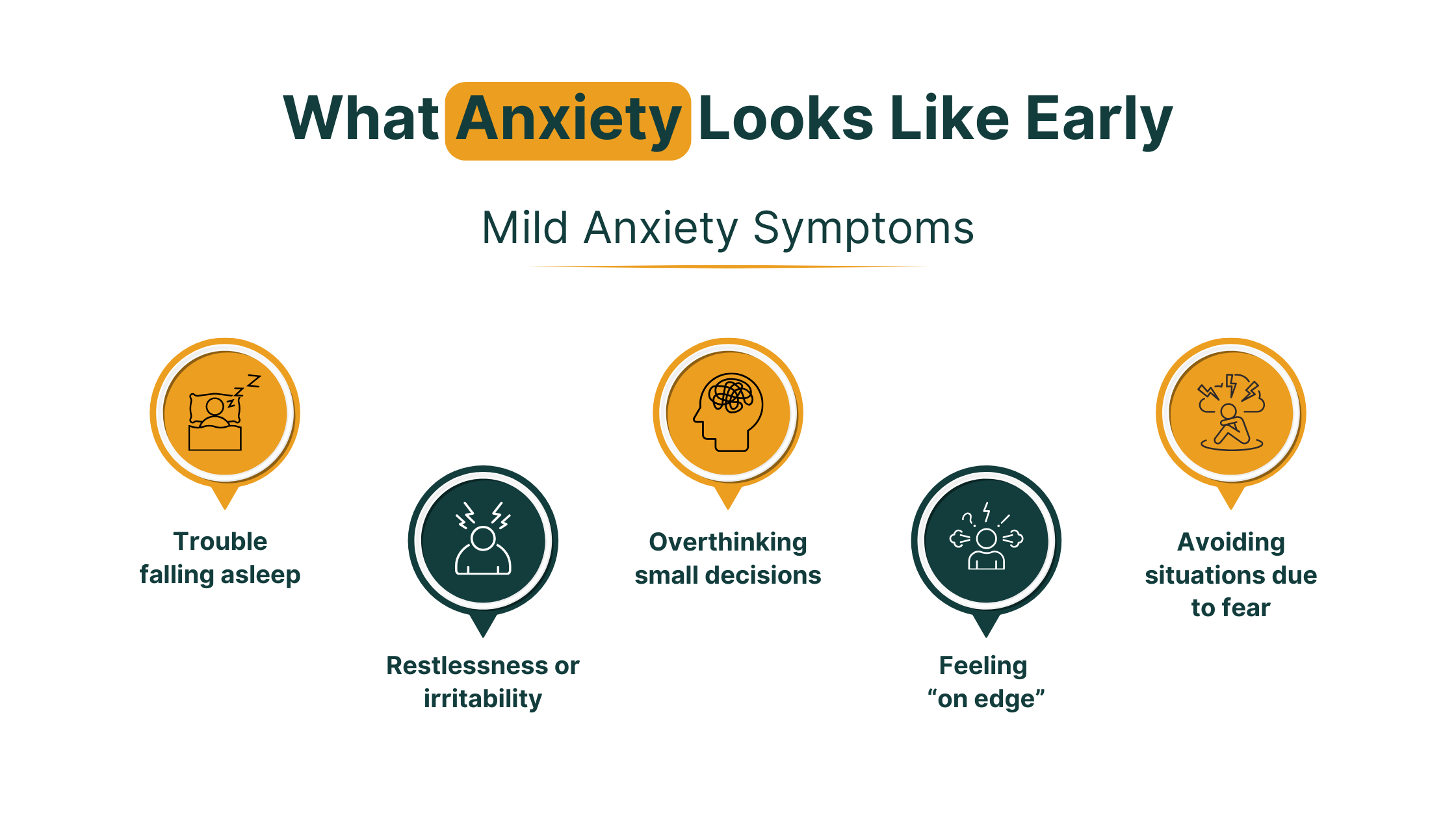
Anxiety doesn’t always show up in obvious ways. Sometimes it starts with mild anxiety symptoms that can be easy to dismiss:
- Trouble falling asleep because your mind won’t quiet down
- Avoiding certain situations out of fear of being judged or failing
- Feeling “on edge” most of the time, even without a clear reason
- Second-guessing yourself more often than usual
These mild symptoms are important to recognize. They’re the body’s way of signaling that something deeper may need attention. Left unaddressed, they can intensify and evolve into more serious signs of anxiety disorder.
Common Signs of Anxiety Disorder
When mild symptoms grow, they can develop into more noticeable and distressing patterns, such as:
- Frequent panic attacks or intense episodes of fear
- Difficulty concentrating or memory lapses caused by constant worry
- Muscle tension, headaches, or digestive problems triggered by stress
- Avoidance of social situations, work obligations, or relationships
According to Dr. Barbara Fontane’s approach to psychotherapy and psychoanalysis, these recurring challenges often point to deeper, unconscious patterns that need to be understood, not just managed
Why Early Recognition Matters
Anxiety thrives in silence. The longer it goes unnoticed or unaddressed, the more it embeds itself in daily life. By identifying the early signs of anxiety, you give yourself the chance to:
- Break cycles of overthinking before they escalate
- Address emotional triggers early on
- Build coping strategies that foster resilience
- Prevent anxiety from evolving into depression or other disorders
In other words, early recognition opens the door to healing before anxiety controls more areas of your life.
Anxiety Treatment Options
The good news? Anxiety is treatable, and you don’t have to wait for life to fall apart before seeking help
Psychotherapy
. There are several anxiety treatment options depending on your needs:
1. Psychotherapy
Therapies like psychotherapy and supportive therapy help uncover the roots of anxiety while providing practical coping tools. Unlike quick fixes, psychotherapy builds long-term resilience and helps you understand the emotional patterns driving your worry.
2. Psychoanalysis
For those with recurring anxiety or unresolved emotional wounds, psychoanalysis offers a deeper, transformative process. It goes beyond surface-level symptom relief to explore unconscious thoughts and past experiences that may fuel your current anxiety.
3. Lifestyle Approaches
Mindfulness practices, regular exercise, and healthy routines can complement therapy by calming the nervous system and reducing daily stress.
4. Medication (When Needed)
In some cases, medication can be an important part of treatment, especially when anxiety significantly disrupts daily functioning. A psychiatrist can guide you in integrating medication with therapy for a holistic plan.
Moving Beyond Coping to Healing
One of the most important takeaways from Dr. Fontane’s work is that anxiety isn’t just about managing symptoms, it’s about uncovering the root causes. Coping skills like deep breathing or meditation can help in the moment, but if you find yourself stuck in the same patterns, it may be time to go deeper.
- Psychotherapy helps you understand your triggers and develop healthier ways of responding.
- Psychoanalysis helps you uncover unconscious fears and long-held emotional wounds that keep anxiety in place.
By combining these approaches, many people find clarity and transformation instead of temporary relief.
When to Seek Help
It’s easy to tell yourself, “I should be able to handle this on my own.” But just like you wouldn’t ignore physical pain, you shouldn’t ignore emotional distress. Consider seeking professional support if you notice:
- Persistent worry that doesn’t improve with self-care
- Avoiding situations you used to enjoy
- Sleep or appetite changes tied to anxiety
- Strained relationships because of irritability or fear
- A sense that your anxiety is running your life
You don’t need to wait until symptoms feel unmanageable. Therapy and psychoanalysis are most effective when started early, as they help prevent anxiety from worsening over time.
Final Thoughts
Recognizing the early signs of anxiety is one of the most powerful steps you can take for your mental health. From mild anxiety symptoms like restlessness or overthinking to more serious signs of anxiety disorder, awareness gives you the chance to act before things spiral.
If you’ve been wondering how to know if you have anxiety, consider whether your worries are persistent, overwhelming, or interfering with daily life. And remember: you don’t have to navigate this alone.
Dr. Barbara Fontane and her team provide both approaches, combining evidence-based care with a compassionate, individualized process.
Because recognizing the signs of anxiety is the first step toward healing, and that step begins with reaching out for help.