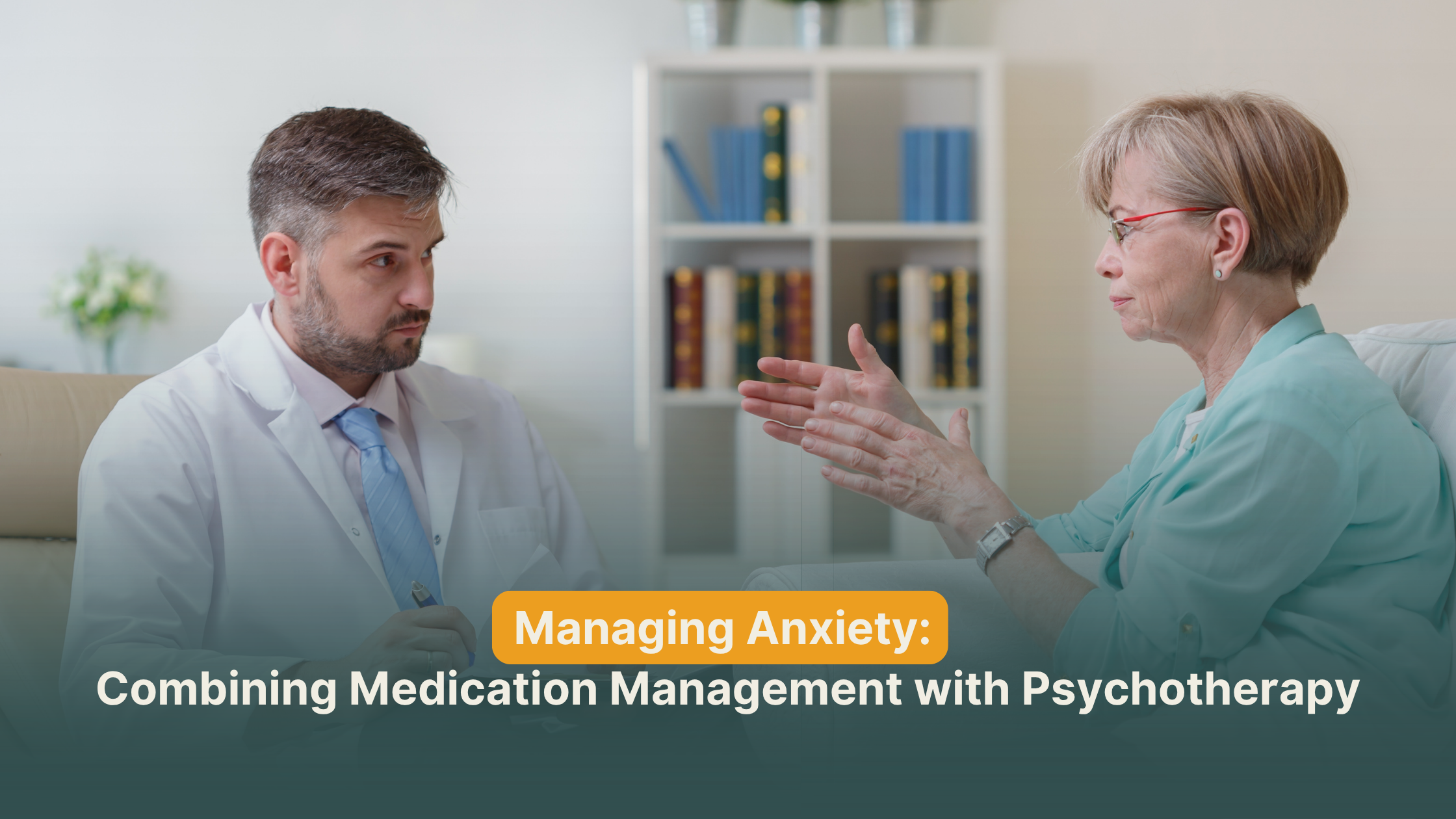
April brings longer days, shifting routines, and a subtle pressure to “feel better” as spring settles in. It is also recognized as April Stress Awareness Month, a time that gently reminds us how deeply stress and anxiety can shape our daily lives.
For many people, this season does not feel light or fresh. It can feel overwhelming as deadlines pick up, expectations rise and social calendars return.
And internally, anxiety can quietly intensify. This is where an important question begins to surface. When is it enough to talk through anxiety, and when might additional support be helpful?
Understanding how medication management and therapy work together can make that decision feel less confusing and more grounded.
Understanding Anxiety Beyond the Surface
Anxiety is not always loud or obvious. Sometimes it shows up with signs like overthinking, difficulty sleeping, irritability, or a constant sense that something is not quite right.
For individuals dealing with conditions like Generalized Anxiety Disorder Treatment, these feelings are not occasional. They are persistent and often exhausting.
You might notice:
- A mind that rarely slows down
- Physical symptoms like tension or fatigue
- Difficulty focusing or making decisions
- A constant loop of “what if” thoughts
While psychotherapy for anxiety helps unpack these patterns, there are moments when emotional insight alone may not fully relieve the intensity of symptoms. Thus, you can combine approaches to make it meaningful for you.
Medication Management vs. Psychotherapy: Is It Either-Or?
A common misconception is that you must choose between therapy and medication.
In reality, the conversation around Medication Management vs. Psychotherapy is not about choosing sides. It is about understanding what your mind and body need at a particular moment in time.
Therapy helps you:
- Understand emotional patterns
- Process experiences
- Build coping tools
Medication, when thoughtfully prescribed, can:
- Reduce overwhelming symptoms
- Stabilize mood and anxiety levels
- Create space for therapy to be more effective
When anxiety feels manageable, therapy alone may be enough. But when symptoms begin to interfere with daily functioning, combining both approaches can offer relief and clarity.
When Does Anxiety Need Medical Support?
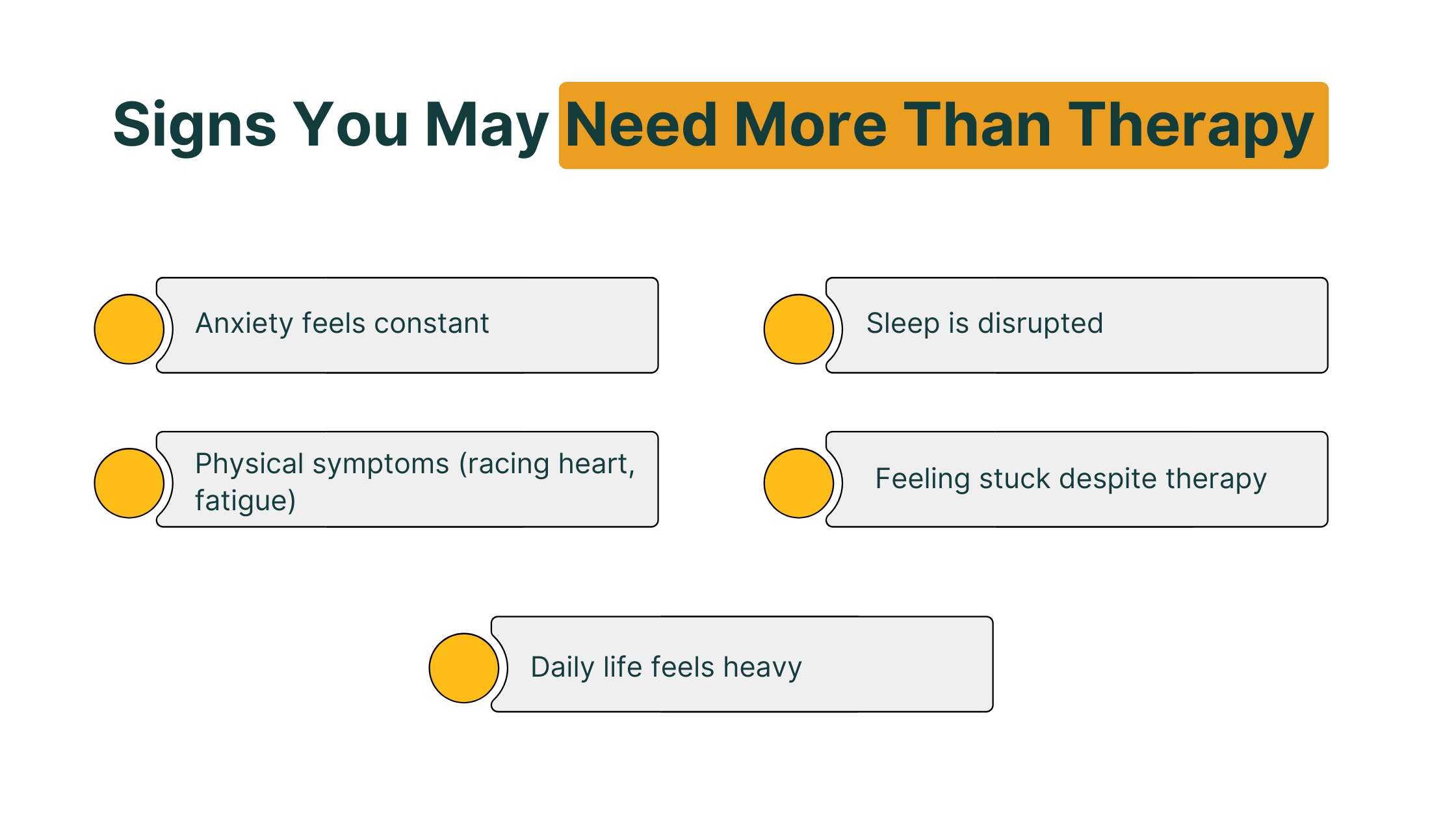
There is no single rule for when to take medication for anxiety, but there are signs that additional support may be helpful.
You might consider exploring medication management for anxiety if:
- Anxiety is constant rather than situational
- Sleep is consistently disrupted
- Physical symptoms like racing heart or restlessness are frequent
- You feel stuck despite ongoing therapy
- Daily responsibilities start to feel overwhelming
This does not mean something is “wrong” with you. It means your nervous system may need more support than talk therapy alone can provide right now.
Can You Do Therapy Without Medication?
Absolutely yes. Many individuals benefit deeply from therapy for anxiety disorders without ever using medication. Therapy can help you build awareness, regulate emotions, and create lasting change.
However, if anxiety becomes too intense, it can make therapy harder to engage with. Thoughts may race too quickly. Emotions may feel too heavy to process.
In such cases, psychiatric medication management can act as a stabilizing layer, allowing therapy to do its deeper work.
How Combined Care Supports Long-Term Healing
When therapy and medication are used together thoughtfully, they do not replace each other. They support each other for long-term mental health treatment. For example:
- Medication may reduce the intensity of anxious thoughts
- Therapy helps you understand why those thoughts exist
- Together, they create both relief and insight
This approach is often part of GAD Treatment, where managing symptoms and addressing underlying patterns go hand in hand. Over time, some individuals may reduce or even stop medication under guidance. Others may continue with a low dose for stability. The goal is never dependency. It is balance.
A Gentle Check-In This April
April can be a good moment to pause and ask yourself a few honest questions:
- Is my anxiety manageable, or does it feel constant?
- Am I coping, or just getting through each day?
- Would additional support make this feel lighter?
There is no pressure to rush into decisions. But there is value in noticing what your mind and body are asking for.
Conclusion
Healing happens when you find the right combination that works for you at a particular time in your life. For some, that is therapy alone can help. For others, therapy can be supported by medication management. The important thing is not which path you choose, but whether it helps you feel more steady, more aware, and more like yourself.
In a season that often asks you to bloom, it is okay to first take care of your roots. And sometimes, that care looks like asking for support in more than one way.
One of the most effective ways to approach anxiety is by working with a professional who understands both therapy and medication.
Seeing a psychiatrist for anxiety treatment who also provides psychotherapy offers a more connected experience. Instead of separating your care into different providers, your treatment becomes more cohesive.
This integrated approach allows for:
- Better understanding of your emotional patterns
- Thoughtful adjustments to medication when needed
- A balance between symptom relief and deeper self-exploration
Dr. Barbara Fontane embodies this philosophy through her work as a Psychiatrist in Harrison NY. With over two decades of experience, she combines insight-oriented therapy with mental health medication management, ensuring that care remains both personalized and intentional. Her focus is not just on reducing symptoms, but on helping individuals understand themselves more fully.