Anxiety that lingers for years. Memories that surface without warning. A body that reacts to everyday situations as though danger is still present. For many people, these experiences are connected to unresolved trauma, and general mental health support alone may not address the root cause.
Trauma therapy offers a more focused and evidence-based approach to healing by helping individuals process painful experiences, regulate emotional responses, and rebuild a sense of safety. Unlike traditional counseling, trauma-focused therapy is designed to work with the deeper emotional and physiological effects of trauma that often contribute to anxiety, PTSD, chronic stress, and emotional overwhelm.
If you have been wondering whether trauma therapy could help you or someone you care about, this guide explains what trauma therapy is, how it differs from traditional counseling, and what the recovery process may look like.
What You’ll Learn in This Guide
- What Is Trauma Therapy
- What Is Traditional Counseling
- Counseling vs Therapy Differences
- Trauma Therapy vs Traditional Counseling
- Benefits of Trauma Therapy
- How Therapy for Trauma Recovery Works
What Is Trauma Therapy?
What is trauma therapy, exactly? At its core, it is a category of specialized mental health treatment designed to help individuals process and heal from traumatic experiences. Rather than focusing only on managing symptoms, trauma therapy targets the psychological and neurological imprints that trauma leaves behind.
Trauma does not only live in memory. It lives in the body, in automatic reactions, and in the way a person interprets safety and threat long after the original experience has passed. Modalities like EMDR, trauma-focused cognitive behavioral therapy, somatic therapy, and psychodynamic approaches all fall under this umbrella, each offering a structured method of helping the nervous system process what was too overwhelming to integrate at the time.
What Is Traditional Counseling?
What is traditional counseling in comparison? Traditional counseling typically involves a structured, goal-oriented relationship focused on present-day concerns. Sessions help clients build coping skills, work through life transitions, manage relationship challenges, and gain perspective on current stressors.
Counseling is genuinely valuable for many situations. The key distinction is scope. Traditional counseling is generally not designed to address the deep neurological and physiological imprints that trauma leaves on the mind and body. For someone whose anxiety or distress is rooted in past traumatic experiences, this gap matters.
How Trauma Impacts Anxiety and PTSD
Trauma affects more than memory. It can change how the brain and body respond to stress long after the original experience has passed.
For many individuals, unresolved trauma contributes to persistent anxiety, emotional overwhelm, panic attacks, intrusive thoughts, or PTSD symptoms. The nervous system may continue operating in survival mode, making everyday situations feel unsafe or emotionally exhausting.
This is why some people find that general anxiety treatment alone does not fully address the deeper cause of their distress. Trauma therapy for anxiety and PTSD works by helping the mind and body process unresolved experiences rather than only managing surface-level symptoms.
Counseling vs Therapy Differences
Traditional counseling and trauma therapy both support mental health, but they are designed for different purposes.
Counseling is often focused on present-day challenges such as stress, relationship concerns, communication difficulties, or life transitions. It typically helps individuals build coping strategies and emotional support around current situations.
Trauma therapy goes deeper by addressing how past experiences continue affecting emotional regulation, relationships, behavior patterns, and the nervous system. It is especially beneficial for individuals experiencing PTSD symptoms, unresolved childhood trauma, chronic hypervigilance, or anxiety that has not improved through traditional approaches alone.
In many cases, the most effective treatment combines supportive counseling with trauma-informed therapeutic work.
Trauma Therapy vs Traditional Counseling: Choosing the Right Fit
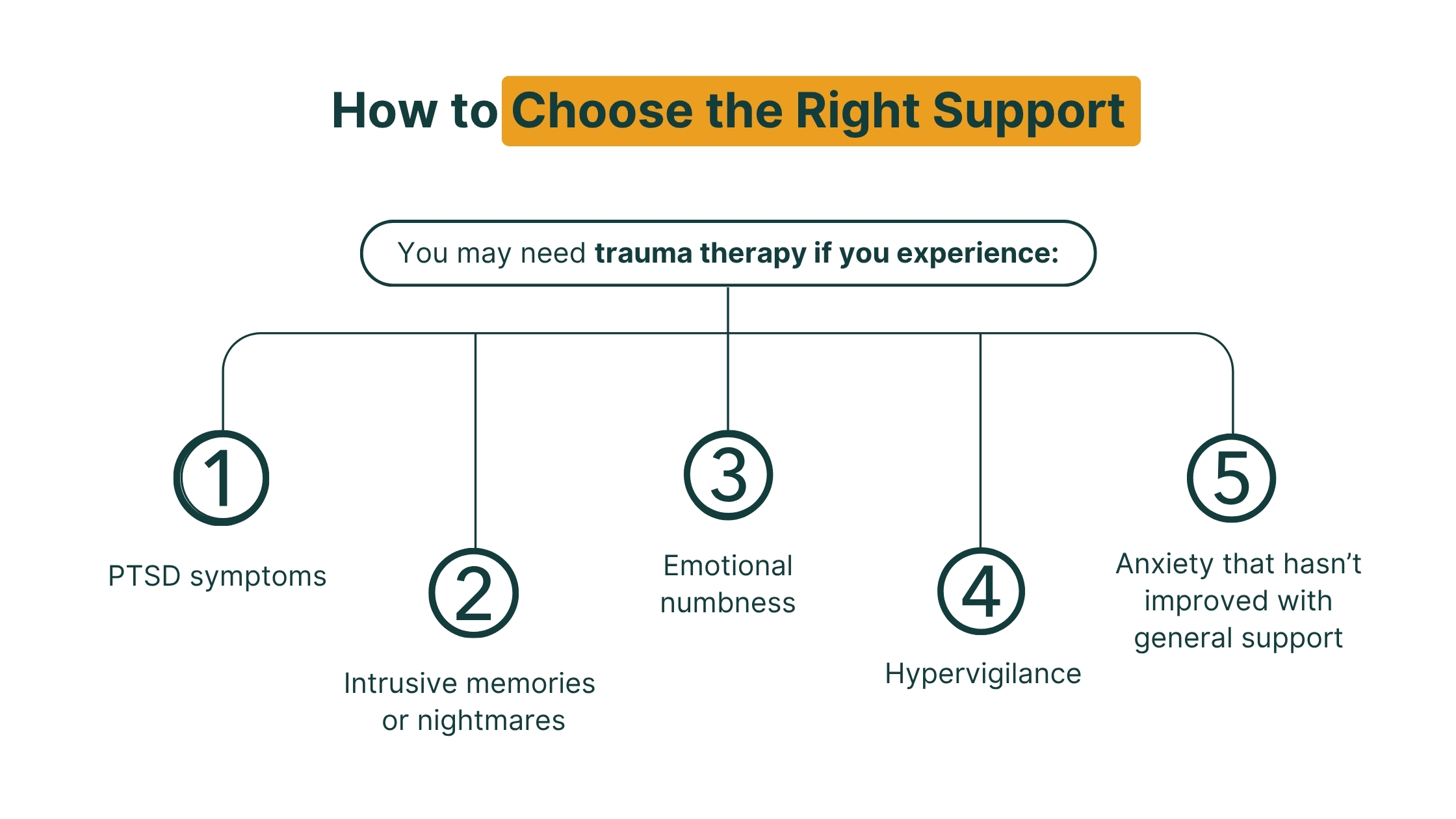
In the trauma therapy vs traditional counseling conversation, the real question is fit, not ranking. Situational stress, relationship difficulties, and life transitions often respond well to counseling. PTSD symptoms, trauma-rooted anxiety, intrusive memories, emotional numbness, and hypervigilance typically require something more specialized.
A skilled clinician can often integrate both. At Dr. Barbara Fontane’s practice in Harrison, New York, psychotherapy and psychoanalysis are woven together to address both present-day functioning and the deeper roots of distress. The most effective approach is frequently a combination, tailored to the individual rather than pulled from a fixed menu.
Benefits of Trauma Therapy
The benefits of trauma therapy are well-documented and can be substantial for those who have struggled for years without finding lasting relief.
Processing trauma at its source, rather than only managing its symptoms, leads to more durable outcomes. Many people experience significant reductions in PTSD symptoms, including flashbacks, nightmares, and hyperarousal. Anxiety that was previously resistant to treatment begins to shift once its underlying cause is addressed. Emotional regulation improves. A restored sense of safety replaces the chronic vigilance that trauma tends to produce.
Psychodynamically informed trauma work also builds self-understanding, helping people recognize patterns and defenses that developed as adaptations to difficult experiences and no longer serve them.
How Therapy for Trauma Recovery Works
Therapy for trauma recovery generally moves through several phases, though the timeline and structure vary by individual.
The first phase centers on safety and stabilization. Before any processing of traumatic material occurs, the therapist helps the client build grounding skills, emotional regulation tools, and a stable therapeutic relationship. This foundation is not optional; it makes the deeper work possible.
The second phase involves directly processing the traumatic experiences. Depending on the approach, this might involve structured memory processing, somatic awareness work, or psychodynamic exploration of how past events continue living in the present.
The third phase focuses on integration. The goal extends beyond symptom reduction to genuine internal change, where the traumatic experience becomes part of a person’s history without continuing to dominate daily life.
Signs you need trauma therapy
Not all anxiety is trauma-related, but certain patterns may suggest unresolved trauma is contributing to emotional distress.
Signs that trauma-informed therapy may be helpful include:
- recurring panic or hypervigilance
- emotional numbness or disconnection
- intrusive memories or nightmares
- feeling constantly “on edge”
- strong emotional reactions that feel difficult to control
- chronic anxiety that persists despite treatment
Recognizing these patterns early can help individuals seek support that addresses the root cause rather than only the symptoms.
Trauma-Informed Care in Westchester County
Dr. Barbara Fontane offers personalized psychiatric and psychotherapeutic care at 600 Mamaroneck Avenue in Harrison, New York, with virtual and in-person appointments available across Westchester County. With over 20 years of clinical experience and psychoanalytic training through the Contemporary Freudian Society of New York, Dr. Fontane works with individuals experiencing trauma and PTSD, anxiety disorders, depression, bipolar disorder, and a range of other conditions.
Her approach combines psychiatry, psychotherapy, and psychoanalysis to support long-term emotional health. Treatment is individualized, paced according to each patient’s readiness, and built around genuine care rather than symptom management alone.
Frequently Asked Questions
Which is better: trauma therapy or counseling?
The better choice depends entirely on what you are dealing with. Trauma-rooted distress typically requires trauma-specific treatment. Present-day challenges often respond well to counseling. Many people benefit most from an integrated approach.
When should someone consider trauma therapy?
Trauma therapy may be helpful when symptoms such as panic, hypervigilance, emotional numbness, intrusive memories, or chronic anxiety continue interfering with daily life.
Is trauma therapy different from regular therapy?
Yes. Trauma therapy involves specialized training and modalities specifically designed for trauma processing, going beyond what standard talk therapy typically addresses.
How trauma therapy works vs talk therapy?
Talk therapy generally explores thoughts and feelings through conversation. Trauma therapy also works with the body, implicit memory, and automatic nervous system responses, aiming for neurological and emotional resolution rather than insight alone.
How does trauma therapy help PTSD?
Trauma therapy helps reduce PTSD symptoms by safely processing traumatic experiences and improving emotional and nervous system regulation