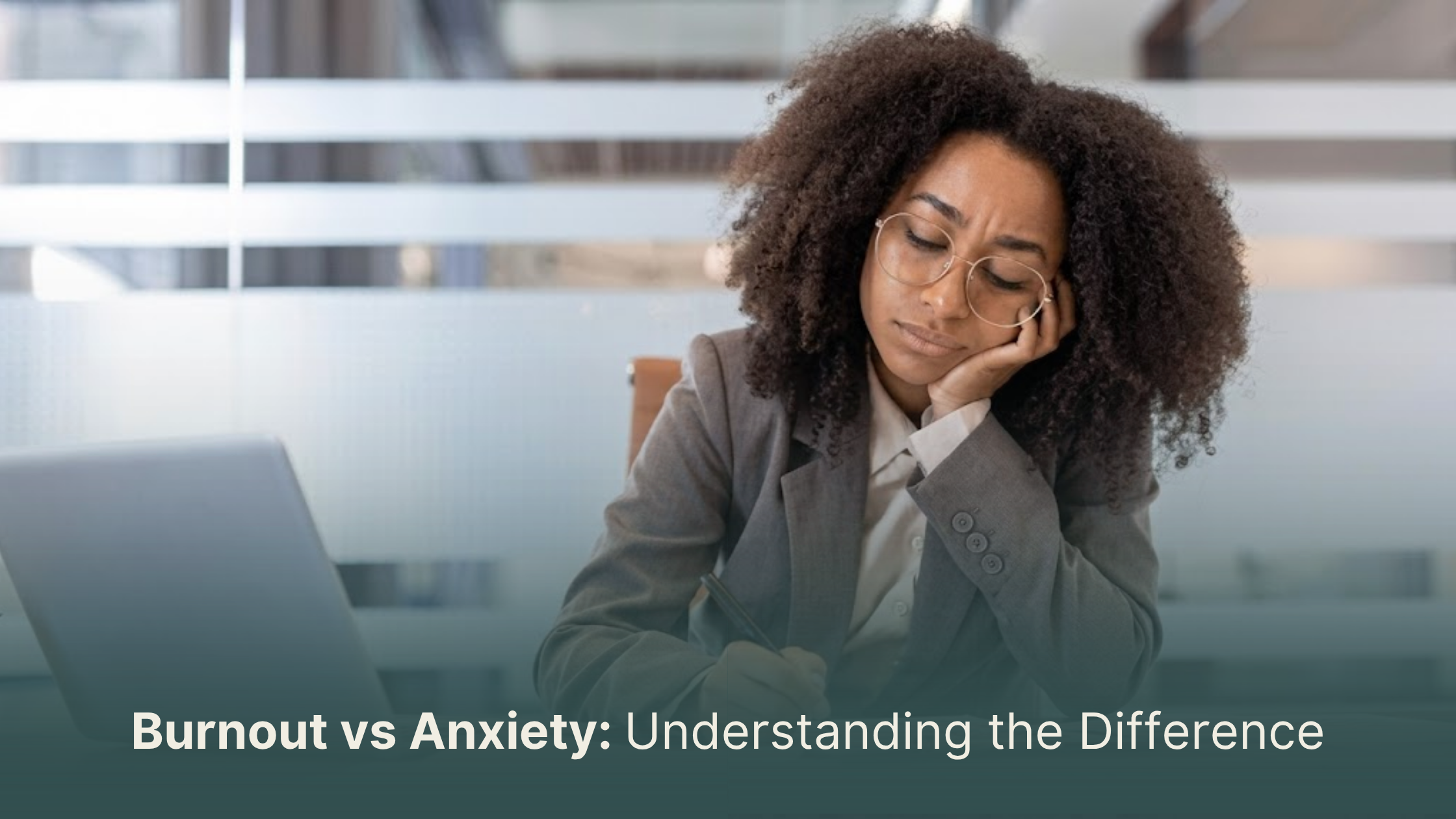
You wake up exhausted even after eight hours of sleep. You feel behind on everything, yet somehow detached from all of it. Your chest is tight before the day has even started. You keep pushing through, telling yourself it will get better once things slow down.
But what if slowing down never actually helps? What if what you’re carrying has a name, and that name matters more than you think?
Burnout and anxiety are two of the most misunderstood experiences in modern mental health. People use the words interchangeably, and it is easy to see why. They can look similar from the outside and feel tangled from the inside. But they are different in important ways, and confusing one for the other can keep you stuck trying the wrong solutions.
What Burnout Actually Feels Like
Burnout is not just being tired. It is a state of chronic depletion, most often linked to prolonged stress in a specific area of life, whether work, caregiving, or a role that demands more than it gives back. The emotional exhaustion that comes with burnout does not go away with a long weekend. It lingers. It flattens. You may feel cynical about things you once cared about, or notice that your performance has quietly slipped even when you are putting in the same effort.
Burnout builds slowly. It is the accumulated weight of too much, for too long, with too little recovery.
What Anxiety Looks Like When It Will Not Let Go
Anxiety works differently. Where burnout tends to make you feel empty or numb, anxiety keeps the volume turned all the way up. The mind races through worst-case scenarios. The body holds tension in the shoulders, the stomach, the jaw.
One pattern worth understanding is high-functioning anxiety, which often goes unnoticed precisely because the person appears to be doing well. They show up, they meet deadlines, they keep things running. But underneath, there is a constant hum of dread and fear of what happens if they stop. People with high-functioning anxiety rarely look like they are struggling, which makes it easy to dismiss what they are actually experiencing.
Burnout vs Anxiety: Where They Diverge
Understanding anxiety vs burnout starts with the direction of the experience.
Burnout moves inward. It depletes. It disconnects. The emotional energy that once drove you runs dry, and everything starts to feel like going through the motions.
Anxiety moves outward. It activates. It overreacts. The nervous system is bracing for something that may or may not happen. There is too much feeling, not too little.
In burnout, the primary emotion is often exhaustion or numbness. In anxiety, it is fear or apprehension. That said, the two frequently coexist. Chronic anxiety can accelerate burnout, and living in burnout can trigger anxiety about falling behind or failing the people depending on you. Untangling which is which is part of why working with a skilled clinician matters so much.
Why the Distinction Matters for Treatment
This is where the difference becomes more than just academic.
Burnout often calls for rest, boundaries, and a reassessment of the demands that depleted you. But burnout recovery also benefits from therapeutic work that goes beneath the surface. Psychoanalysis, as practiced by Dr. Barbara Fontane, can help uncover the unconscious patterns that make certain people more vulnerable to burnout, including the internalized pressures and the identity built around productivity.
Anxiety, on the other hand, often responds to a combination of therapy that addresses thought patterns and nervous system responses, and sometimes medication management to create enough stability for deeper work to take hold. Anxiety disorders are among the most treatable mental health conditions when properly identified and supported.
When both are present together, the treatment needs to address both. Accurate understanding, not just symptom relief, is the foundation of good care.
The Signs That Are Easy to Miss
Some of the people who most need mental health support are the ones who look fine from the outside. High-functioning anxiety keeps people productive, which makes it easy to rationalize. If you are still hitting your goals, how bad can it be? Functioning is not the same as thriving. The longer it goes unaddressed, the more it quietly erodes emotional wellbeing, relationships, and eventually the performance it was protecting.
Similarly, invisible burnout in caregivers, parents, and high-achieving professionals often does not look like collapse. It looks like withdrawal, a dulling of enthusiasm, an increasing reliance on routine just to get through the day.
Neither deserves to be pushed through alone.
Conclusion
You do not need to be in crisis to deserve care. Feeling depleted, on edge, or quietly overwhelmed are all valid reasons to reach out.
Dr. Barbara Fontane offers mental health support grounded in over two decades of clinical experience. Her practice in Harrison, NY serves patients across Westchester County, with virtual appointments available for surrounding areas. Whether you are working through burnout, anxiety, or something that feels like both, care is tailored to you as an individual, not a diagnosis.
Burnout therapy NYC and mental health treatment NYC are available through Dr. Fontane’s practice, alongside the kind of insight-oriented work that helps you understand not just what happened, but why.
If you are ready to take that first step,reach out today to schedule an appointment.