Overview
Choosing between a psychiatrist and a therapist is one of the most common questions people ask when they first reach out for mental health treatment. The two professionals work differently, and picking the wrong one can slow down your progress. This blog breaks down what each provider actually does, how to recognize when medication or talk therapy fits your situation better, and how many people end up benefiting from both. Written from Dr. Barbara Fontane’s clinical experience, it gives you a clear, practical way to decide who to call first.
Table of Contents
- Introduction
- Psychiatrist vs Therapist: What Sets Them Apart
- When to See a Therapist
- When to See a Psychiatrist
- Should I See a Therapist or Psychiatrist? How to Decide
- Anxiety Treatment and Depression Treatment: What Each Provider Offers
- Finding the Right Mental Health Professional
- Conclusion
- FAQ
If you’ve asked yourself, “do I need a psychiatrist or a therapist,” you’re already ahead of most people who wait months before reaching out for help. The two professions overlap, but they’re built for different jobs. A psychiatrist is a medical doctor who can diagnose conditions, prescribe medication, and manage the biological side of mental illness. A therapist works through talk-based methods to help you process emotions, change patterns, and build coping skills. According to the CDC’s National Health Interview Survey, about 20% of U.S. adults use some form of mental health treatment in a given year, split between prescription medication, counseling, and combined care. That gap between symptoms and support is exactly what this guide is meant to close.
In my 20-plus years practicing psychiatry across inpatient and outpatient settings, the question I hear most in a first appointment isn’t about diagnosis. It’s “should I see a therapist or psychiatrist first?” The honest answer depends on what’s driving your symptoms, how severe they’ve become, and whether biology or life circumstance is doing more of the work.
Psychiatrist vs Therapist: What Sets Them Apart
The core difference between psychiatrist and therapist care comes down to training and treatment tools. A psychiatrist completes medical school and residency, which means they can order lab work, diagnose complex conditions, and prescribe medication such as antidepressants or mood stabilizers. A therapist, whether a licensed clinical social worker, psychologist, or counselor, is trained in psychotherapy and does not prescribe medication in most states.
This psychiatrist vs therapist distinction matters because it changes what a first session looks like. A psychiatric evaluation typically covers your medical history, current symptoms, and family history of mental illness, then moves toward a diagnosis and treatment plan that may include medication. A therapy session is built around conversation, patterns, and behavioral tools you can practice between visits. Some psychiatrists, myself included, also provide contemporary Freudian psychoanalysis for patients who want to understand the unconscious roots of a long-standing pattern rather than treat a single symptom in isolation.
Neither professional is “better.” A therapist vs psychiatrist decision isn’t about ranking, it’s about matching the right tool to what you’re dealing with right now.
When to See a Therapist
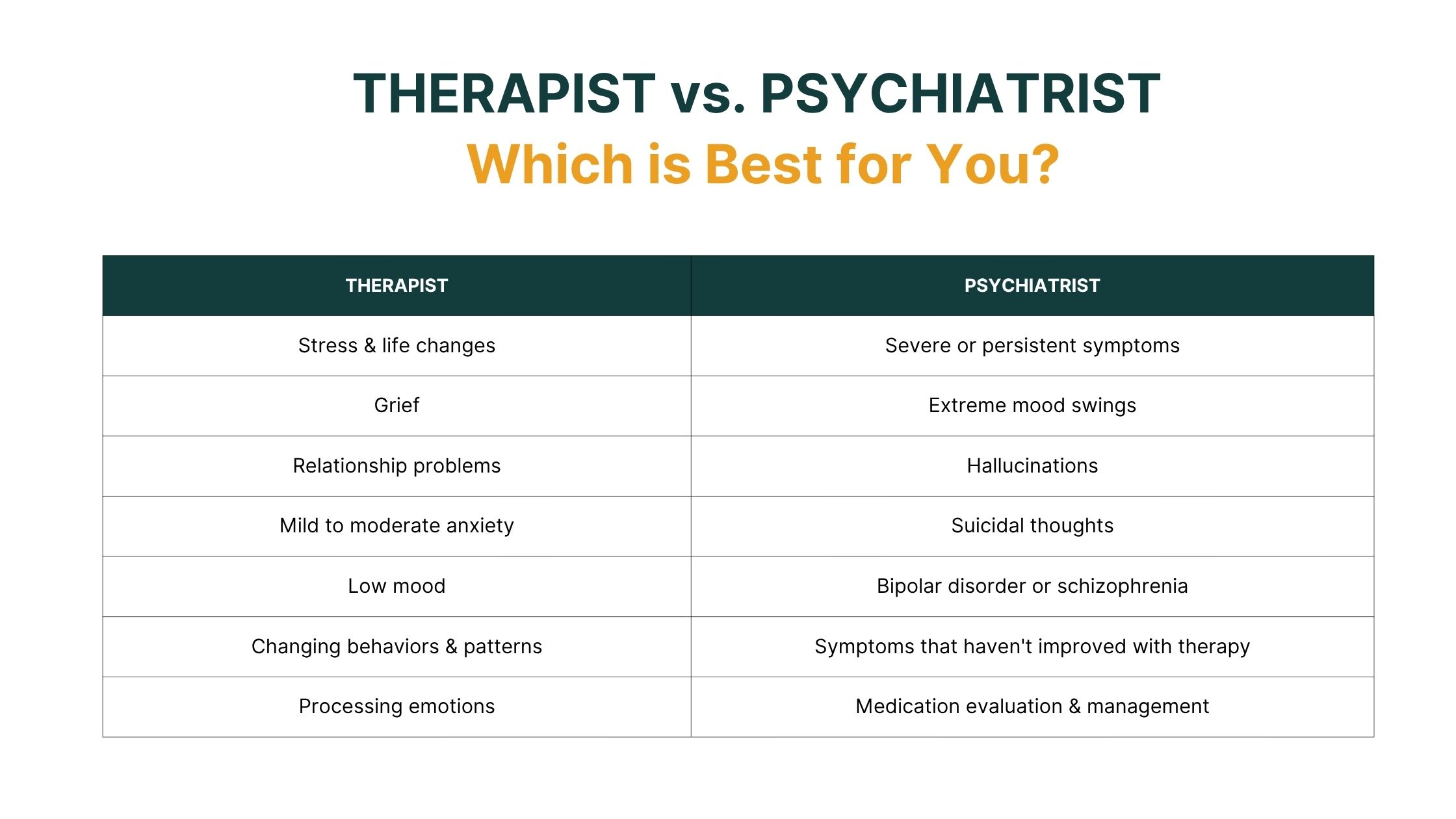
See a therapist when your main need is processing emotions, changing behavior, or working through a specific life stressor, and your symptoms are mild to moderate. Therapy is the right starting point for stress, grief, relationship conflict, or habits you want to break, especially if you haven’t tried talk-based psychotherapy before.
A therapist can help you build tools for anxiety before it becomes disabling, work through grief without judgment, or improve communication in a relationship that’s been strained for months. Knowing when to see a therapist versus waiting things out on your own often comes down to whether your daily routine, sleep, or relationships have started slipping. If you’re not sure whether what you’re feeling is a rough patch or something that needs more structured care, it’s worth reading through the signs that separate ordinary stress from a condition that benefits from treatment. Most people who ask “do I need a psychiatrist or a therapist” for the first time land here, because therapy carries a lower barrier to entry and doesn’t require a medical diagnosis to begin.
When to See a Psychiatrist
See a psychiatrist when symptoms are severe, involve a biological component, or haven’t improved after three to six months of consistent therapy. This includes extreme mood swings, hallucinations, suicidal thoughts, or conditions like bipolar disorder and schizophrenia that typically respond best to medication alongside therapy.
A psychiatric evaluation also makes sense for adjustment disorders tied to major life changes, the psychological impact of a serious medical diagnosis such as cancer, or a pre-surgical psychological assessment required before bariatric surgery. Families navigating conflict, adolescents showing behavioral changes, and adults managing anger issues or substance misuse often benefit from a psychiatrist’s medical lens as much as from talk therapy. Knowing when to see a psychiatrist rather than continuing with therapy alone can shorten months of trial and error. When symptoms plateau despite regular sessions with a therapist, that’s usually the clearest sign that a medical evaluation, not more of the same, is the next step.
Should I See a Therapist or Psychiatrist? How to Decide
Ask yourself three questions: how severe are my symptoms, have I tried therapy already, and do I suspect a biological or genetic component. If symptoms are mild and new, start with a therapist. If symptoms are severe, involve a family history of mental illness, or haven’t responded to months of therapy, a psychiatrist should be your next call. There’s no wrong answer in the therapist vs psychiatrist decision as long as you’re honest with yourself about how much your symptoms are interfering with daily life.
A quick checklist:
- Mild to moderate anxiety or low mood with no prior treatment → start with a therapist
- Symptoms lasting more than six months without improvement → see a psychiatrist
- Suicidal thoughts, hallucinations, or extreme mood swings → see a psychiatrist immediately
- Wanting to understand recurring patterns in relationships or self-worth → therapist or Freudian psychoanalysis
- Needing medication alongside ongoing talk therapy → both, working together
| Therapist | Psychiatrist | |
| Can prescribe medication | No | Yes |
| Best for | Talk therapy, behavioral change, processing emotions | Diagnosis, medication management, complex or severe conditions |
| Typical session length | 45-60 minutes | 20-45 minutes (follow-ups often shorter) |
| Training | Master’s or doctoral degree in counseling, social work, or psychology | Medical degree plus psychiatric residency |
| Good starting point when | Symptoms are new or mild | Symptoms are severe or medical in nature |
Many patients don’t have to choose at all. Combined mental health treatment, therapy for weekly behavioral work and a psychiatrist for medication management, is one of the most effective paths for moderate to severe depression and anxiety disorders.
Anxiety Treatment and Depression Treatment: What Each Provider Offers
Anxiety treatment and depression treatment usually work best as a combination of medical and behavioral care rather than one approach alone. A psychiatrist can evaluate whether an antidepressant or anti-anxiety medication is appropriate, monitor side effects, and adjust dosage over time. A therapist builds the behavioral side: exposure techniques for anxiety, cognitive strategies for depression, and solution-focused psychotherapy tailored to your specific goals.
For generalized anxiety, panic disorder, and OCD, anxiety treatment often starts with therapy and adds medication if symptoms don’t ease within a few months. Depression treatment follows a similar path, though moderate to severe depression frequently responds faster when medication and therapy start together rather than sequentially. Your emotional wellbeing depends less on which provider you see first and more on whether the treatment plan actually matches the severity of what you’re carrying. A psychiatrist who also understands psychodynamic therapy, rather than one who only manages prescriptions, can catch when a medication adjustment isn’t the real fix and a deeper root cause needs attention instead.
Finding the Right Mental Health Professional
Finding the right mental health professional starts with an honest look at your symptoms, not a search for the provider with the shortest wait time. Ask about their approach to evaluation, whether they offer both psychiatric and psychotherapy services, and how they handle cases that don’t respond to the first plan.
For patients across Westchester County, New York City, and surrounding areas, in-person and secure telehealth appointments make it easier to start without a long commute. If you’ve already been searching for guidance on choosing between providers nearby, this breakdown on how to find the right psychiatrist in Westchester County covers the practical side of vetting credentials and specialties. Your emotional wellbeing should guide the search as much as logistics do, and a qualified mental health professional should also be transparent about insurance, and practices that accept major plans like Aetna, Cigna, and UnitedHealthcare remove one more barrier between you and consistent mental health treatment.
Conclusion
The difference between psychiatrist and therapist care isn’t about which one is right and which is outdated, it’s about matching the provider to what your symptoms actually need. Start with a therapist for new or mild symptoms, involve a psychiatrist when symptoms are severe, medical, or resistant to therapy alone, and don’t rule out using both at once. If you’re still asking yourself “do I need a psychiatrist or a therapist,” the safest next step is a proper evaluation rather than guessing. Book a consultation with Dr. Barbara Fontane to get a clear, personalized answer and a plan that fits your situation.
FAQ
What is the difference between a psychiatrist and a therapist?
A psychiatrist is a medical doctor who can diagnose conditions and prescribe medication, while a therapist provides talk-based psychotherapy without prescribing. Many patients see both: a psychiatrist for medication management and a therapist for weekly behavioral work, especially for moderate to severe anxiety or depression.
How do I know if I need a psychiatrist or a therapist?
Start with symptom severity. Mild, new symptoms usually respond well to therapy alone, while severe symptoms, suicidal thoughts, or conditions with a strong biological component call for a psychiatric evaluation. If therapy hasn’t helped after three to six months, a psychiatrist is the next step.
When should I see a psychiatrist?
See a psychiatrist for severe symptoms such as extreme mood swings, hallucinations, or suicidal thoughts, for conditions like bipolar disorder, or when therapy alone hasn’t improved your symptoms after several months. A psychiatric evaluation can also help before major medical procedures like bariatric surgery.
When should I see a therapist?
See a therapist for stress, grief, relationship conflict, or habits you want to change, particularly when symptoms are mild to moderate and you haven’t tried talk therapy before. Therapy is often the first and most accessible step in a mental health treatment plan.
How can I find the right mental health professional?
Look for a provider who evaluates severity honestly, offers both psychiatric and psychotherapy options if possible, and accepts your insurance. Practices offering in-person and telehealth appointments across your area, with transparent credentials, make it easier to start treatment without unnecessary delays.