Overview
Fall brings shorter days, fuller calendars, and a steady rise in worry for many adults and teens. This article explains why anxiety and stress increase from September through November, which signs point to a seasonal pattern instead of a passing mood, and which daily habits steady your mind. It also shows when symptoms call for professional care, including the two-week and three-to-six-month marks that guide treatment decisions, and how a therapist and a psychiatrist divide the work. It is written by a psychiatrist with more than 20 years of clinical experience, and it gives you clear steps to take this season, from a simple morning routine to a framework for deciding when to seek help.
Table of Contents
- Introduction
- Why Does My Anxiety Feel Worse During the Fall?
- What Are Common Signs of Seasonal Anxiety and Stress?
- How Can I Manage Anxiety Triggered by Seasonal Changes?
- When Should Seasonal Anxiety Be Addressed With Psychotherapy?
- Conclusion
- FAQ
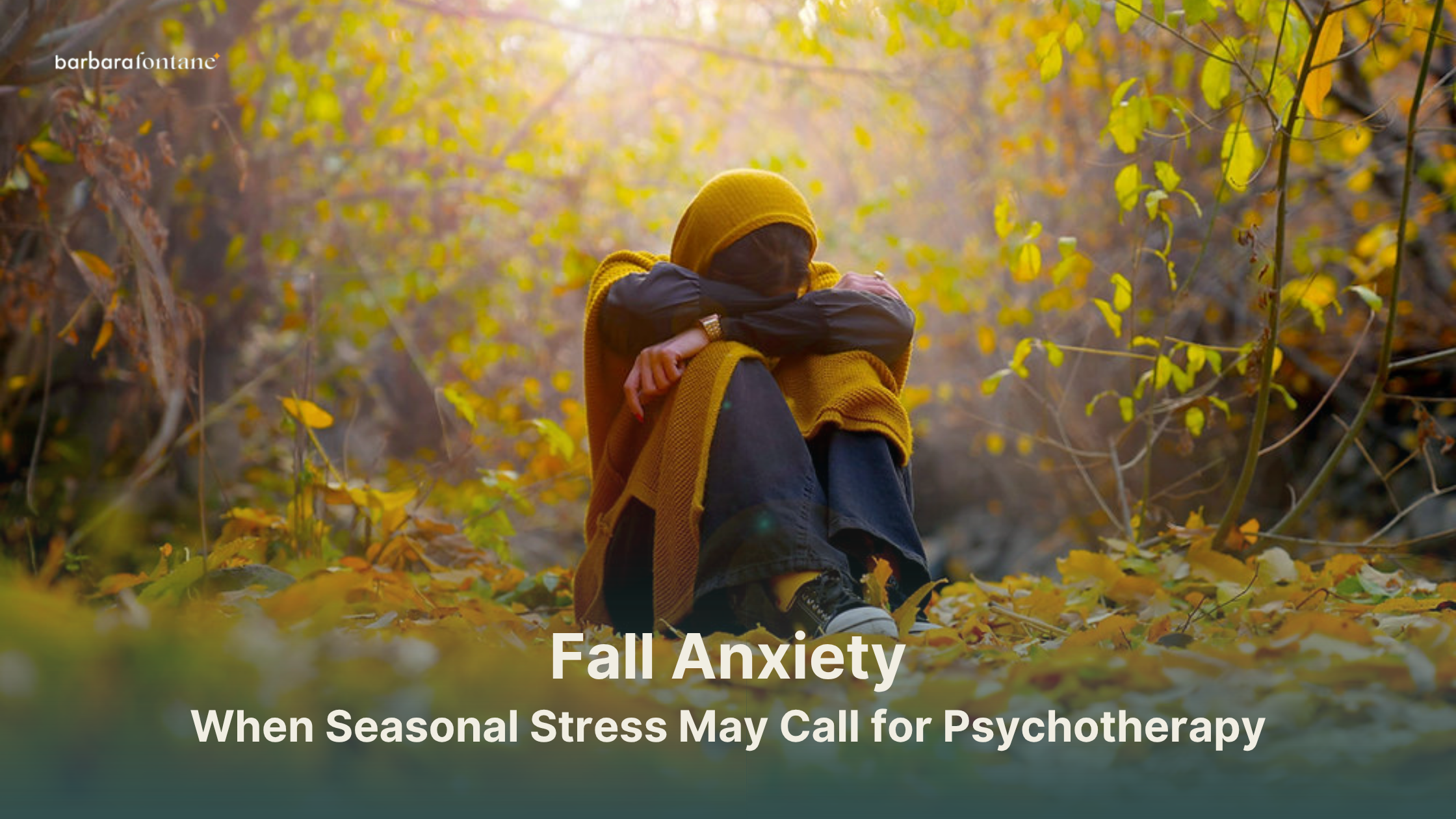
Fall anxiety is common, and it responds well to treatment. In more than 20 years of inpatient and outpatient psychiatry, I have seen the same pattern every September. Patients who handled summer comfortably start reporting racing thoughts, restless nights, and a sense of dread they cannot explain. Daylight shrinks, school and work deadlines return, and the holidays come into view, all within a few weeks. Fall stress builds gradually, so many people miss it until it touches sleep, work, or relationships. This article explains what drives seasonal anxiety, how to recognize it, and when psychotherapy for anxiety is the right next step.
Why Does My Anxiety Feel Worse During the Fall?
Anxiety feels worse in fall because three pressures arrive together. Daylight drops by nearly three hours between the September equinox and the winter solstice, routines tighten with school and work deadlines, and holiday expectations begin. Your body clock, sleep, and mood all respond to that combined load.
Light is the first factor. Morning sunlight helps regulate your circadian rhythm, the internal clock that controls sleep, energy, and mood. When mornings turn dark, that clock drifts, sleep becomes lighter, and the brain reads the added fatigue as threat. Poor sleep alone raises baseline worry, which is why autumn anxiety often begins with insomnia before any other complaint.
Routine is the second factor. September restarts school schedules, commuting, and carpools. October adds year-end targets, budgets, and performance reviews. Parents carry the planning for everyone, and adolescents face new classes and social pressure. For adults with generalized anxiety, panic disorder, or OCD, this density of demands is often the trigger that moves symptoms from manageable to disruptive.
The third factor is memory. Many patients tell me that fall carries anniversaries of losses, moves, or hard years. Those reactions are real, and they are one reason fall mental health deserves attention in its own right instead of being dismissed as the “back to busy” blues. When the same pattern returns year after year, contemporary Freudian psychoanalysis can trace it back to its unconscious roots. Understanding how seasonal anxiety forms is the first step toward treating it.
What Are Common Signs of Seasonal Anxiety and Stress?
Common signs of seasonal anxiety include persistent worry, trouble falling or staying asleep, irritability, muscle tension, racing thoughts, and pulling away from plans. When these last two weeks or longer and return each fall, stress has crossed into anxiety.
Autumn Anxiety Symptoms to Watch For
Here is the checklist I give patients. Three or more items present most days for two weeks signals a pattern worth addressing:
- Waking at 3 or 4 a.m. with a racing mind
- Tight shoulders, headaches, or stomach discomfort without a medical cause
- Snapping at family or coworkers over small things
- Dreading ordinary tasks such as emails or school drop-off
- Declining invitations you would normally enjoy
- Craving more sugar or alcohol to relax in the evening
These autumn anxiety symptoms differ from ordinary fall stress in duration and reach. A tough week before a deadline fades when the deadline passes. Anxiety stays, spreads into areas of life that were fine before, and often arrives on a yearly schedule. If you recognize several items above, that is a clear cue it may be time to seek help for anxiety before winter deepens the pattern.
How Can I Manage Anxiety Triggered by Seasonal Changes?
Manage seasonal anxiety by anchoring your day with a fixed wake time, 20 to 30 minutes of morning daylight, regular movement, planned downtime, and a weekly check-in with someone you trust. In my experience, these habits steady your body clock and lower baseline stress within two to three weeks.
Follow these steps in order:
- Fix your wake time. Choose one time, including weekends, and keep it within 30 minutes. A stable start steadies the circadian rhythm that fall disrupts.
- Get outside within an hour of waking. Even on a cloudy day, outdoor light is far brighter than indoor light and signals your brain that the day has started.
- Move for 20 to 30 minutes. A brisk walk counts. Movement burns off the tension hormones that build during busy weeks.
- Schedule recovery as you would a meeting. Block one evening each week with no obligations, and protect it.
- Name your top three commitments. October invites overcommitment. Writing down three priorities lets you say no to the rest without guilt.
- Talk to one person weekly. Saying worries out loud reduces their weight, and a trusted listener can notice changes you miss.
These steps support fall mental health for most people. They also work as a test. If you follow them for three weeks and symptoms hold steady or worsen, the cause likely runs deeper than routine, and the next section applies. Left alone, autumn anxiety tends to deepen as daylight keeps shrinking.
When Should Seasonal Anxiety Be Addressed With Psychotherapy?
Address seasonal anxiety with psychotherapy when symptoms last two weeks or longer, disrupt sleep, work, school, or relationships, or return every fall. Early treatment works best, and a repeating yearly pattern is a clear signal that the root cause deserves attention.
When to seek therapy for anxiety is a question I hear often, and the answer rests on three markers: duration, disruption, and repetition. If worry has lasted two weeks, if it interferes with daily function, or if you have felt the same way in previous autumns, these are all strong reasons to start. When to seek therapy for anxiety should never depend on reaching a crisis point. Starting in October gives you months of support before the darkest weeks of winter.
My approach to psychotherapy for anxiety integrates evidence-based psychiatry with psychodynamic talk therapy, so we address why anxiety returns each year instead of only easing symptoms. Patients who start in early autumn have steady support in place well before winter arrives.
Therapist vs. Psychiatrist: Who to See in 2026
See a therapist for mild to moderate symptoms if you have not tried talk therapy. See a psychiatrist for severe symptoms, complex conditions such as bipolar disorder, or no improvement after three to six months of therapy alone. Many people benefit from both.
| Factor | Therapist | Psychiatrist |
| Training | Psychotherapy and behavioral strategies | Medical doctor specializing in mental health |
| Best for | Stress, anxiety, grief, relationship problems, unhelpful habits, past trauma | Extreme mood swings, hallucinations, suicidal thoughts, bipolar disorder, schizophrenia |
| Symptom level | Mild to moderate, no prior talk therapy | Severe, or no progress after 3 to 6 months of therapy alone |
| Medication | Does not prescribe | Prescribes and manages medication |
| Common pairing | Weekly sessions for coping tools | Periodic visits for medication management |
If you have thoughts of suicide, call or text 988 right away, or go to your nearest emergency room.
Conclusion
Fall anxiety is a predictable response to less light, tighter schedules, and rising expectations, and it is manageable when you act early. Use the checklist, anchor your days with the six steps, and track how you feel over three weeks. If symptoms persist, disrupt daily life, or return every year, professional support turns a recurring struggle into something you understand and control.
At Dr. Barbara Fontane’s practice, care combines psychiatry and talk therapy, with medication management added when appropriate. Appointments are available in person in Harrison, New York, or by secure telehealth across Westchester County, New York City, and surrounding areas. Major plans, including Aetna, Cigna, and UnitedHealthcare, are accepted.
Book a consultation with Dr. Barbara Fontane and start this season with a plan.
FAQ
Why does my anxiety feel worse during the fall?
Less daylight disrupts your sleep and body clock, while school, work deadlines, and holiday planning raise daily demands at the same time. Poor sleep lowers your stress tolerance, so ordinary pressure feels heavier. For some people, fall also brings reminders of past losses, which adds emotional weight.
What are common signs of seasonal anxiety and stress?
Watch for constant worry, early-morning waking, irritability, muscle tension, stomach discomfort, and avoiding social plans. Craving more sugar or alcohol in the evening is also common. When three or more signs last most days for two weeks, or return each fall, the pattern points to anxiety rather than ordinary stress.
How can I manage anxiety triggered by seasonal changes?
Keep a consistent wake time, get 20 to 30 minutes of outdoor light each morning, and move your body daily. Limit commitments to your top three priorities and schedule one protected evening of rest weekly. If symptoms persist after three weeks of these habits, professional support is the next step.
When should seasonal anxiety be addressed with psychotherapy?
Start psychotherapy when symptoms last two weeks or longer, interfere with sleep, work, school, or relationships, or return every fall. You do not need to wait for a crisis. Beginning in early autumn gives you weeks of guided support before winter, when light is lowest and symptoms often peak.