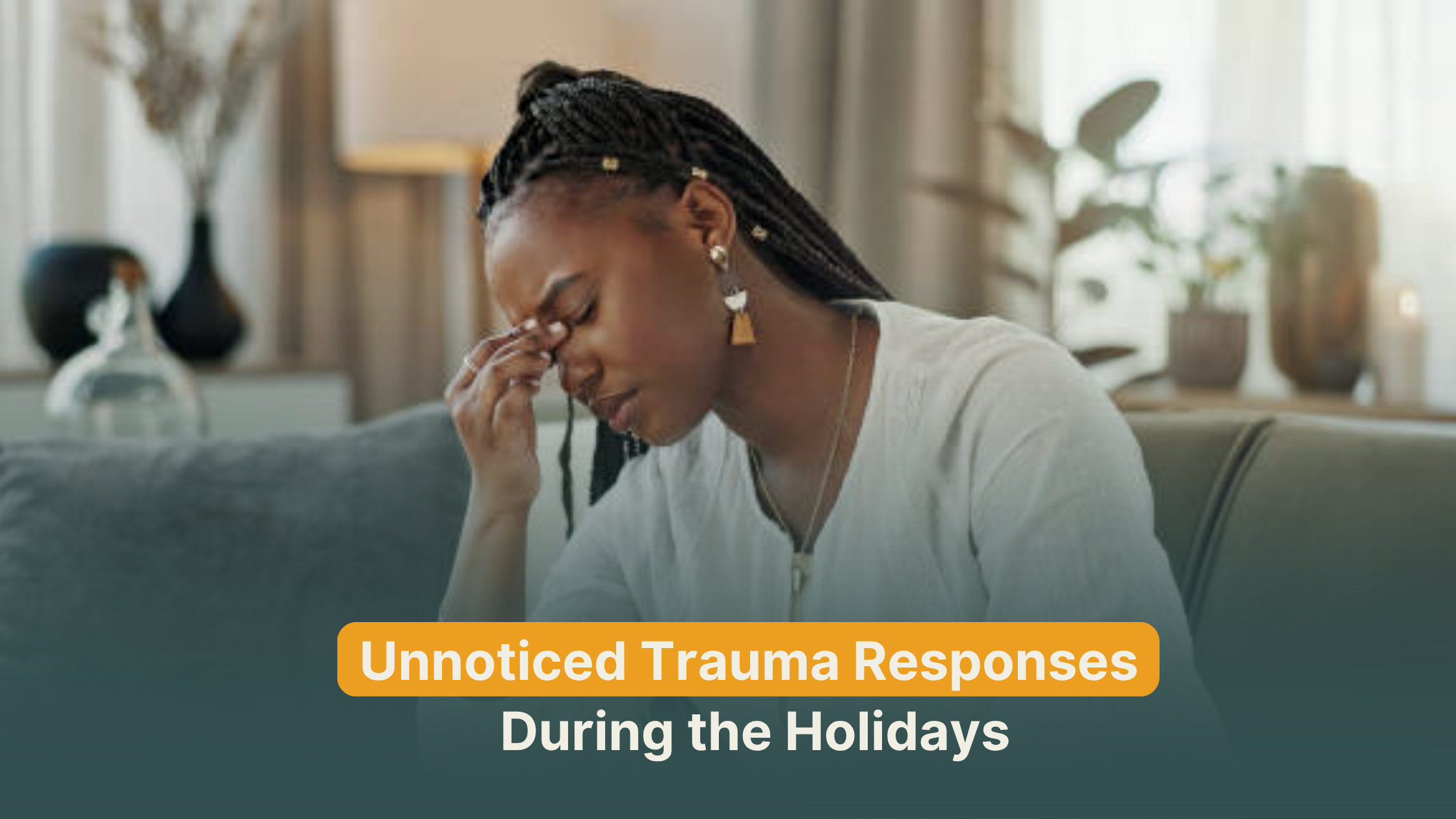
The holidays are often painted as a season of joy warm gatherings, laughter, and gratitude. But for many, this time of year carries a quiet tension that doesn’t fit the festive narrative. Underneath the decorations and family photos, emotional wounds can resurface in unexpected ways.
If you’ve ever felt uneasy, irritable, or strangely detached during the holidays, it might not be just “holiday stress.” It could be the mind’s subtle way of signaling unresolved pain.
When Joy Feels Heavy
For some people, the holidays stir memories they’d rather forget a childhood that didn’t feel safe, strained relationships, or past losses. These memories can create emotional ripples that feel out of place amid celebration. You might notice yourself over-functioning, retreating into silence, or feeling inexplicably exhausted.
These reactions aren’t a weakness. They’re signs of how the body remembers an echo of past experiences resurfacing in moments that mimic old emotional patterns.
The Hidden Layer of Holiday Stress
While everyone talks about managing “holiday stress,” there’s another layer many overlook: holiday stress and trauma. Family dynamics, old arguments, or even the pressure to appear cheerful can activate emotions that go beyond ordinary stress. For someone with a history of emotional pain, these moments can reopen wounds that were never fully healed.
This is why the holidays can feel unpredictable. One minute, you’re smiling at the dinner table. The next, your chest tightens, your throat closes up, and you suddenly need to leave the room. These aren’t random mood swings they’re trauma triggers during holidays, often hiding in plain sight.
Common Yet Overlooked Trauma Responses
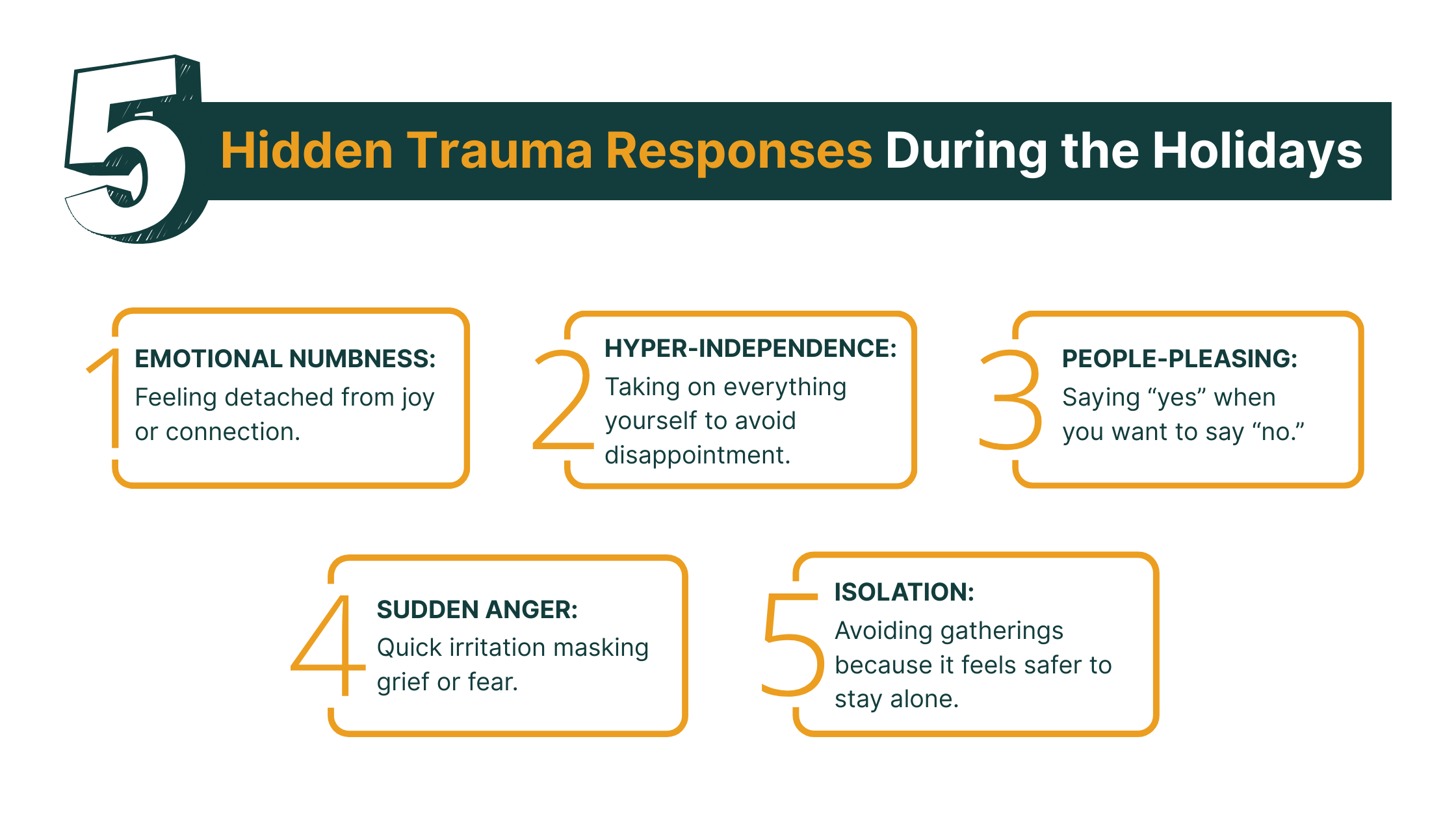
- Emotional Numbness
You might feel disconnected from the joy around you, as if watching life happen through a glass wall. Numbness is a self-protection strategy your mind’s way of saying, “I can’t handle more emotion right now.”
- Hyper-Independence
You insist on doing everything yourself cooking, organizing, planning not because you love control, but because relying on others once led to disappointment or hurt.
- Over-Apologizing or People-Pleasing
You say yes to everything, even at the expense of your own peace. This can stem from earlier experiences where love or safety felt conditional on pleasing others.
- Irritability or Sudden Anger
Anger during the holidays can be confusing, especially when it appears out of nowhere. But sometimes anger hides grief, fear, or years of emotional suppression.
- Withdrawing or Isolating
Canceling plans or avoiding gatherings isn’t always about being antisocial. Sometimes, solitude feels safer than navigating complex emotions in public.
Recognizing these behaviors is the first step toward trauma recovery. They’re not character flaws they’re adaptations your mind created to survive.
The Body Keeps the Score, Even During Celebrations
Emotions we never processed don’t just vanish. They live in the nervous system, influencing how we respond to stress and connection. That’s why you might find yourself tense during small talk, anxious about family interactions, or exhausted even after “resting.”
These experiences often point toward deeper emotional imprints, what clinicians refer to as signs of unresolved trauma. They can quietly shape our reactions, relationships, and even physical health.
This is where professional support matters. Working with a trauma psychiatrist or licensed therapist can help untangle the emotional knots that resurface during the holidays. Through gentle exploration, you can understand where those patterns come from and how to create new ones rooted in safety and awareness.
How Professional Support Helps?
When emotional patterns feel cyclical or hard to name, mental health therapy offers more than just coping tools. It provides a safe, structured space to explore what’s beneath the surface.
In sessions focused on trauma therapy, clinicians help clients reconnect with their emotions without being overwhelmed by them. Techniques may include grounding exercises, inner-child work, and psychoanalytic exploration, all tailored to your comfort level.
Similarly, if your symptoms are more intense, intrusive thoughts, flashbacks, or sleep disturbances, PTSD treatment can help you stabilize and regain a sense of control. A professional can identify which methods best suit your needs, from talk therapy to medication management, depending on your comfort and progress.
For those based in New York, trauma therapy Westchester programs provide access to trauma-informed care that blends compassion with evidence-based techniques. These approaches not only address symptoms but also uncover the deeper emotional narratives that fuel them.
Small Shifts That Support Healing at Home
While professional help is essential, you can begin nurturing safety within yourself this holiday season:
- Set Emotional Boundaries: It’s okay to say no to events or conversations that drain you.
- Create New Traditions: If old rituals feel painful, design ones that reflect who you are now, not who you were.
- Ground Through the Senses: Notice how your body feels in the present the scent of food, the texture of clothing, the sound of laughter.
- Reach Out Early: You don’t have to wait for a breakdown to seek help. Early support can prevent deeper distress later.
Even small steps like choosing to rest instead of performing joy, can be acts of courage.
Conclusion: Ready to Begin Your Healing Journey?
Healing from trauma doesn’t mean erasing the past; it means learning to live with it differently. The holidays can become an opportunity to rewrite the emotional script to experience connection without fear, and rest without guilt.
You deserve to feel present, grounded, and safe not just during the holidays, but throughout the year.
If this season feels heavier than expected, you don’t have to carry it alone. Compassionate support can help you make sense of your emotions and create space for peace. Schedule a confidential session today to learn how trauma therapy for PTSD can help you reconnect with yourself and move toward lasting emotional balance.