The holiday season often arrives with a mix of warmth, excitement, and pressure. While the lights, gatherings, and traditions create a sense of togetherness, they also tend to stir emotions that don’t surface during the rest of the year. Many people find themselves pulled into old roles, overwhelmed by expectations, or drained by conversations that cross their comfort zone.
This is exactly where emotional boundaries become essential. They help you protect your peace, honor your needs, and stay present without stretching yourself thin. Learning how to set emotional boundaries during a time filled with family gatherings and social commitments is one of the best gifts you can give yourself.
Why the Holidays Make Boundaries Harder
Holiday gatherings often blur the lines between care and pressure. Everyone assumes that the usual plans will continue as they always have. That familiarity is comforting for some but heavy for others. Old patterns, family dynamics, and unresolved emotions can make even simple get-togethers feel loaded. This is why managing holiday stress becomes challenging. You’re simultaneously juggling social expectations, internal pressure, and a desire to keep everything harmonious.
Common reasons boundaries feel harder in December include:
- People assume you can participate the same way you always have
- Family routines bring up past versions of you
- Emotional history resurfaces without warning
- The pressure to “be cheerful” feels stronger than usual
When you add fatigue from travel, work, and year-end responsibilities, managing stress during the holidays becomes even more important.
Signs That Someone Is Crossing Your Boundaries
Many people don’t realize their discomfort until after the gathering ends. Your body often knows before your mind does. This is why understanding healthy emotional boundaries is key. You can spot the early signs by tuning into your reactions, especially around family members who tend to comment, pry, or push.
Notice these signals:
- Feeling tense or defensive around certain conversations
- Feeling guilty for wanting space or quiet
- Feeling emotionally drained after spending time with a specific person
- Feeling the need to justify your decisions or personal life
These reactions are gentle reminders that your limits are being stretched. Recognizing them early helps you address situations calmly instead of reacting from frustration later.
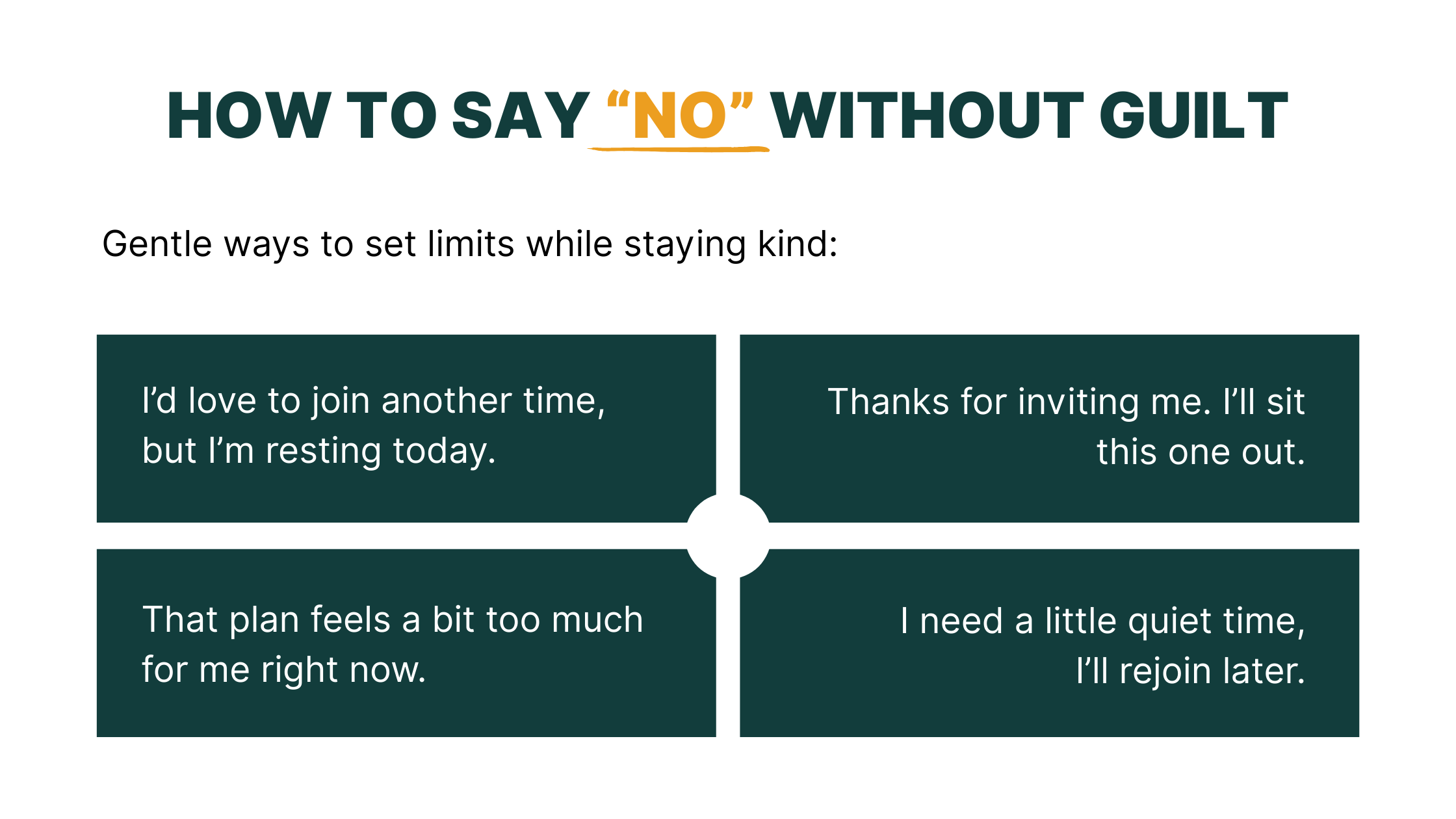
How to Say “No” Without Guilt
One of the toughest parts of dealing with holiday stress is declining invitations or conversations without carrying guilt. But saying no doesn’t mean you’re unkind. It means you’re choosing what feels safe and manageable.
Simple ways to say no kindly:
- “I’d love to join another time, but I’m resting today.”
- “That plan feels a bit too much for me right now.”
- “Thanks for inviting me. I’ll sit this one out but appreciate it.”
- “I need a little quiet time, but I’ll rejoin later.”
These phrases protect your emotional boundaries while still respecting the relationship. They allow you to stay honest, gentle, and present with your needs.
What to Do When Family Doesn’t Respect Your Boundaries
Setting emotional boundaries with family can feel especially complicated. People who’ve known you the longest may resist the idea that you’ve changed or grown. It’s common to encounter pushback, jokes, or pressure disguised as concern.
Here are ways to stay grounded when someone ignores your limits:
- Repeat your boundary calmly
- Change the subject without explanation
- Step out of the room to breathe
- Shorten the time you spend in overwhelming situations
- Focus on the people who make you feel emotionally steady
Some conversations don’t deserve your energy. You’re allowed to protect yourself, even if others don’t understand your reasons.
Holiday Stress Management That Actually Helps
True holiday stress management isn’t about doing more. It’s about choosing the small practices that anchor your emotions. These help you feel steady even when the season gets loud or emotionally intense.
Supportive practices include:
- Creating small rituals that keep you grounded
- Taking breaks during long gatherings
- Limiting emotionally heavy conversations
- Giving yourself permission to leave early
- Keeping a calming practice like journaling or stepping outside for fresh air
These steady moments help you stay rooted in the present instead of being swept into old emotional patterns.
Conclusion
As the season unfolds, it’s also important to remember that emotional reactions don’t always announce themselves clearly. Many people move through gatherings with subtle unnoticed trauma responses during the holidays. These moments can look like irritability, emotional fatigue, people-pleasing, or the instinct to slip back into old roles. Recognizing these quiet shifts allows you to protect your space with more awareness and compassion. And for anyone needing steadier support or guidance during this time, I’m here to help you .