
PTSD is often pictured as something dramatic, flashbacks, nightmares, or intense emotional reactions. But in everyday life, post-traumatic stress disorder rarely looks that obvious. Many people who are living with PTSD quietly move through their routines while carrying emotions, memories, and reactions that others may never notice. That’s what makes understanding PTSD so important. When the signs are subtle, people often blame themselves for struggling instead of recognizing what their bodies and minds are trying to communicate.
PTSD is not a weakness or a failure. It is the natural response of a nervous system that has experienced overwhelming stress. And because trauma can sit beneath the surface for years, the way it shows up in daily life can be confusing. Someone may appear calm, functional, or even successful, yet feel constantly on edge, drained, or disconnected without knowing why.
What PTSD Looks Like in Daily Life
To understand what PTSD looks like outside clinical definitions, it helps to pay attention to the small things,the daily choices, reactions, and emotional shifts that seem unrelated on the surface. These everyday signs of PTSD often go unnoticed because they appear manageable or “normal,” especially when someone has learned to hide their discomfort.
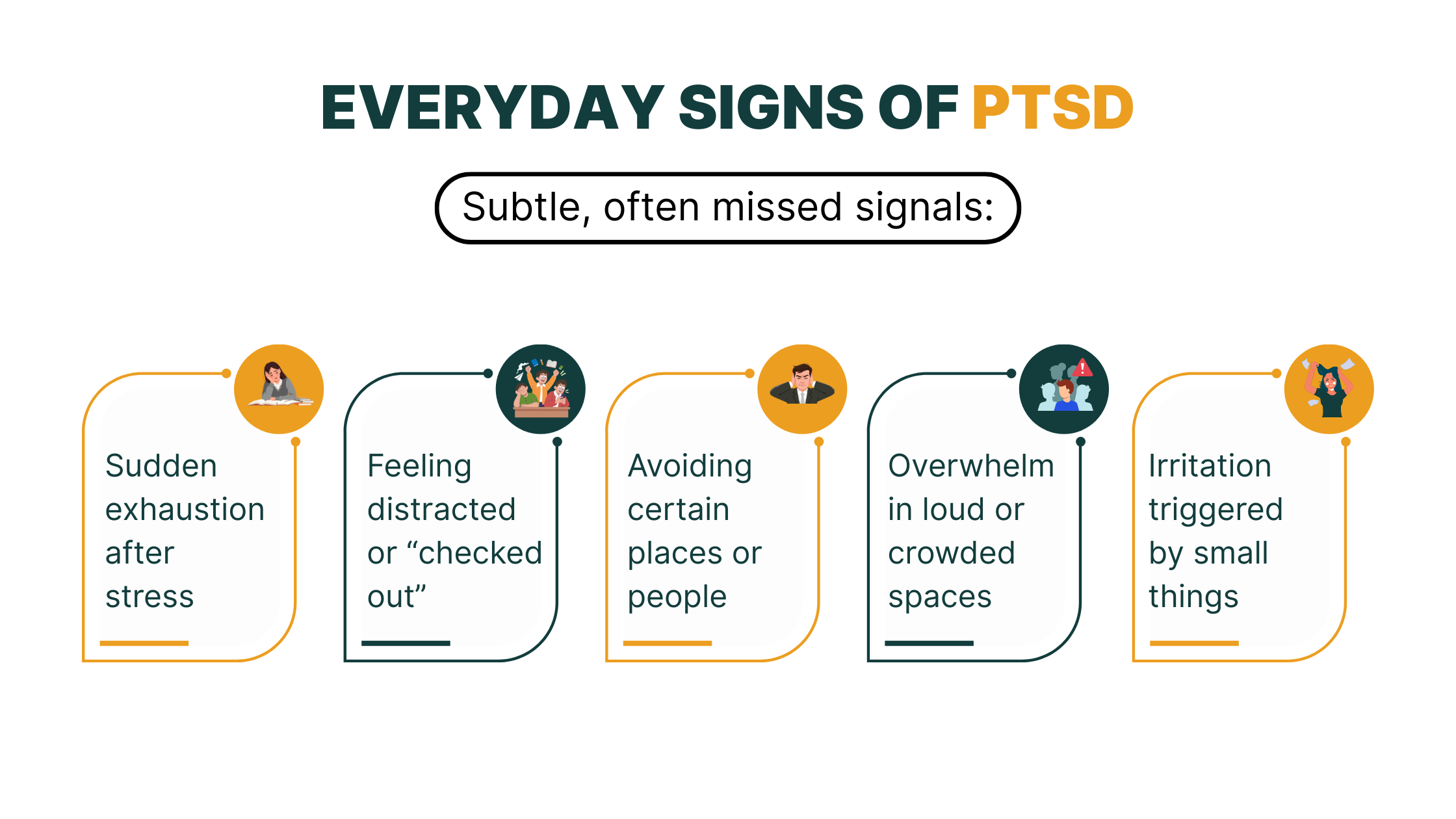
Some everyday signs of PTSD that people often miss include:
- A sudden drop in energy after a stressful conversation
- Feeling distracted or dissociated during calm moments
- Avoiding certain places, people, or topics without realizing why
- Feeling overwhelmed by loud noises or crowded environments
- Getting unusually irritated by minor triggers
While these reactions may seem small, they often connect to deeper memories or unresolved emotional patterns. When someone experiences repeated overwhelm, their body becomes trained to scan for danger even when nothing is wrong. This constant state of alertness becomes one of the most common PTSD symptoms, yet many people simply assume they are “too sensitive” or “overreacting.”
How PTSD Shows Up in Interactions
One of the most overlooked aspects of living with PTSD is how it affects daily interactions. People may struggle to trust others, feel misunderstood, or find it hard to stay emotionally present during conversations. These patterns aren’t intentional. They’re protective responses.
PTSD behavior patterns in everyday social situations can include:
- Pulling back emotionally when someone gets too close
- Feeling anxious when plans are uncertain
- Misinterpreting neutral expressions as criticism
- Apologizing too much or shutting down during conflict
- Having difficulty expressing needs or boundaries
These reactions often come from a deeply rooted fear that something will go wrong, even when nothing is happening. If someone has lived through unsafe or unpredictable experiences, their brain learns to prepare for the worst. This makes ordinary interactions feel heavier than they appear from the outside.
The Impact on Focus, Memory, and Everyday Tasks
A common question people ask is whether PTSD can affect concentration, memory, or decision-making. The answer is yes. When the nervous system is constantly on alert, the brain has less capacity for focus and planning. People may forget appointments, struggle to finish tasks, or feel mentally foggy without understanding why.
PTSD can affect daily functioning by:
- Making it difficult to stay focused for long periods
- Increasing forgetfulness or mental blanks
- Slowing decision-making
- Creating exhaustion after tasks that require emotional effort
- Causing someone to feel detached or “checked out” during the day
These experiences can be frustrating, especially for people who are used to being responsible or high-performing. Instead of realizing these are signs of PTSD, they may blame themselves for not being able to “keep up.”
Everyday Triggers That Don’t Seem Like Triggers
Not all triggers look intense or dramatic. In fact, many are quiet and subtle. A certain smell, tone of voice, or physical space can bring back sensations that the mind doesn’t consciously connect to the original event. Someone might suddenly feel anxious, angry, or numb without understanding the reason.
Common everyday triggers include:
- Sudden noises or unexpected changes
- Being interrupted during a task
- Feeling rushed or pressured
- Seeing someone who resembles a person from the past
- Certain dates or seasons that carry emotional weight
Living With PTSD in a World That Keeps Moving
One of the most challenging parts of living with PTSD is the sense that the world continues moving at a pace that doesn’t match your internal state. You might have a full schedule, responsibilities, or relationships that require emotional presence, yet inside, your body is working hard just to feel grounded.
This is why compassion becomes essential, compassion toward yourself, your reactions, and your healing process. Trauma doesn’t follow a timeline. It shows up in the small moments, not just the major ones. And noticing these moments is the first step toward healing.
Conclusion
Understanding PTSD is not only about recognizing intense reactions. It’s about noticing the quieter moments, the emotional shifts, the behavioral patterns, the memories that echo through daily life. When these signs become clearer, it becomes easier to care for yourself with patience and awareness. And for those who want steady support or mental health resources, get your guidance at barbara fontane.