When you start thinking about mental health support, one of the first questions that comes up is simple “Who should I talk to?”.
Some people hear “psychiatrist” and imagine medication only. Others think of a therapist as someone to vent to. The reality is far more different. You understand the difference when you choose the kind of care that fits what you are experiencing right now.
If you have ever found yourself confused by searches like psychiatrist vs psychologist or unsure where therapy ends and medical care begins, you are not alone.
Let’s slow this down and walk through it together.
Understanding the Core Roles
A psychiatrist is a medical doctor who specializes in mental health. This means they have completed medical school and psychiatric training. Because of this background, they can evaluate both emotional and biological factors and prescribe medication when appropriate.
A therapist, on the other hand, is trained to provide talk-based care. This can include licensed clinical social workers, psychologists, marriage and family therapists, and counselors. Their work centers on emotional processing, coping strategies, insight, and behavioral change.
This distinction is the difference between psychiatrist and therapist, but it is not the full story.
What Happens in a Psychiatric Evaluation?
One of the most important aspects of psychiatric care is the psychiatric assessment. This is not a rushed checklist. It is a thoughtful process that looks at mood, sleep, thought patterns, history, relationships, physical health, and life stressors.
At practices like Dr. Barbara Fontane’s in Harrison, New York, assessments are designed to understand the person behind the symptoms. Medication may be part of the conversation, but it is never the only focus. The goal is clarity, not quick fixes.
This is often helpful when someone is dealing with conditions such as major depression, bipolar disorder, OCD, ADHD, trauma, or postpartum mood changes.
What Therapy Focuses On
Therapy creates space to talk, reflect, and understand patterns. For many people, psychotherapy is enough. Weekly sessions can help with anxiety, relationship challenges, life transitions, grief, or burnout.
Some therapists work in a short-term, solution-focused way. Others help clients explore emotions more deeply over time. The work is collaborative and grounded in trust.
One common question people ask is can a therapist prescribe medication. The answer is no. Therapists do not prescribe medication. That is where psychiatric care becomes essential for some individuals.
Where Psychoanalysis Fits In
There is another layer of care that often gets overlooked. Psychoanalysis is an in-depth approach that looks beyond symptoms and coping skills. It explores unconscious patterns, early experiences, and emotional themes that shape how a person relates to themselves and others.
This kind of work is not about speed. It is about understanding. At Dr. Fontane’s practice, psychoanalytic work is offered alongside psychotherapy and medication management, allowing treatment to meet people where they are emotionally and psychologically.
When Should You See a Psychiatrist?
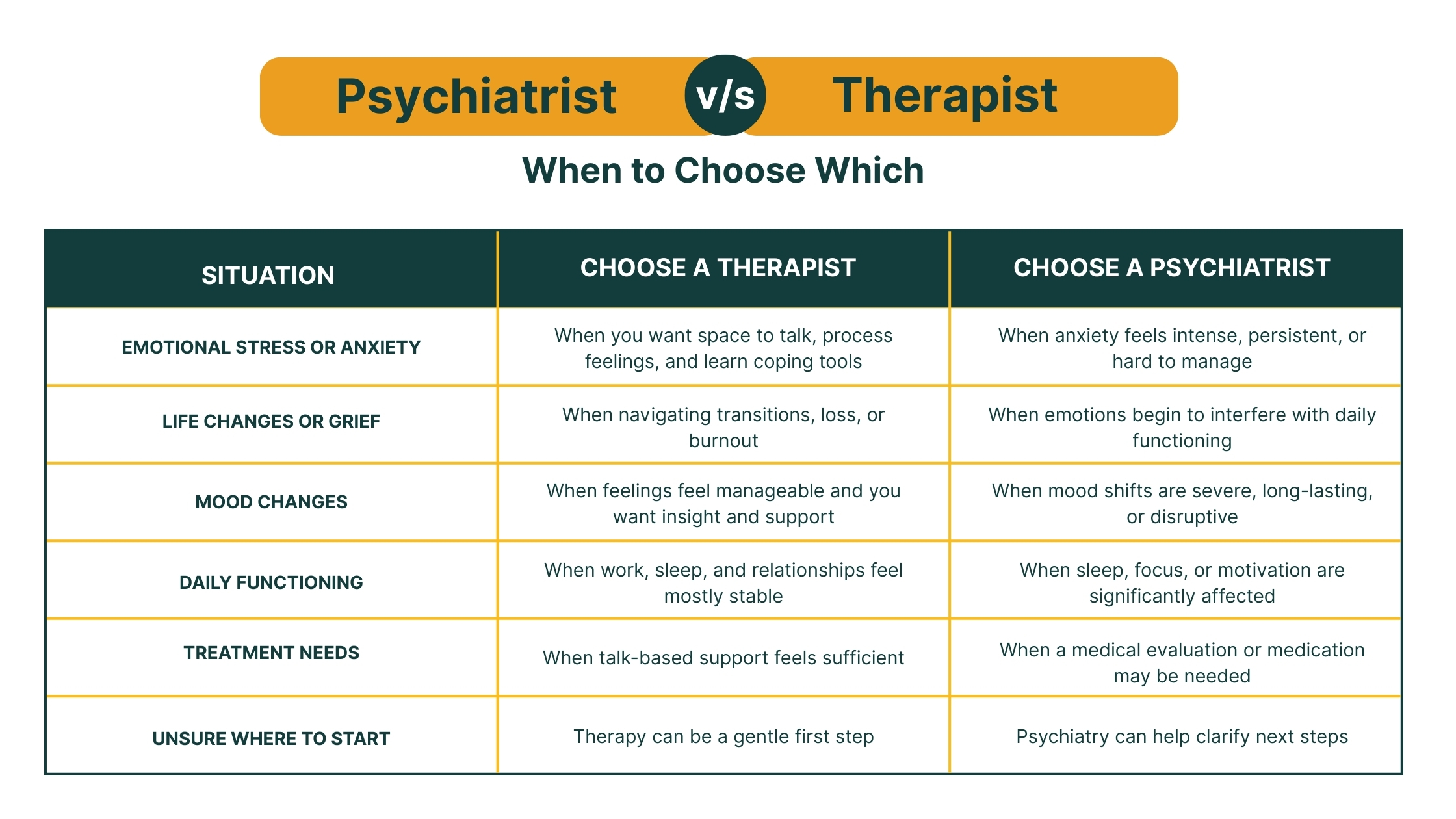
People often ask when should you see a psychiatrist. Some common signs include:
- Symptoms that feel overwhelming or persistent
• Mood changes that interfere with daily functioning
• Anxiety or depression that does not improve with therapy alone
• Concerns about sleep, focus, or emotional regulation
• A need for medication evaluation or ongoing monitoring
Seeing a psychiatrist does not mean you will automatically be prescribed medication. It means you are receiving care from someone trained to evaluate the full picture.
When Is Therapy Enough?
Therapy alone can be deeply effective, especially when symptoms are mild to moderate and someone feels stable in their daily life. Many people benefit from therapy during stressful seasons without needing medical intervention.
The question when is therapy enough depends on how symptoms affect work, relationships, sleep, and overall quality of life. There is no universal answer, only what feels supportive and sustainable for you.
Do You Need Both?
Another common question is do you need both a psychiatrist and a therapist. Sometimes, yes.
Many people find the most support when medication management and therapy work together. Others may start with one and add the other later. Integrated care allows flexibility rather than forcing an either-or choice.
This is where the conversation around psychiatrist vs therapist becomes less about comparison and more about collaboration.
A More Personalized Approach to Care
Mental health care is not about picking the “right” professional on the first try. It is about listening to what you need right now.
Whether you are deciding between psychiatrist vs therapist or simply looking for a space where you feel heard, supported, and understood, the most important step is starting the conversation.
Healing does not begin with labels. It begins with feeling safe enough to explore what is going on beneath the surface.
At the practice of Dr. Barbara Fontane, care is intentionally individualized. With over twenty years of experience, her work blends psychiatry, psychotherapy, and psychoanalysis to support both symptom relief and deeper emotional understanding.
Patients can choose virtual or in-person appointments across Westchester County and beyond. The approach is thoughtful, patient-centered, and grounded in long-term well-being rather than short-term relief.
If you would like to explore how psychiatry and therapy can work together in a more personalized way, explore through Dr. Fontane’s practice.