Anxiety is often described as something that comes and goes. A stressful season at work. A life transition. A difficult relationship. Many people expect it to fade once circumstances change. But for some, anxiety does not follow a neat timeline. It lingers. It intensifies. And over time, it begins to affect daily life in ways that feel confusing and exhausting.
Not all anxiety is a sign that something is wrong. Feeling nervous before a presentation or overwhelmed during a busy period is part of being human. The challenge comes when those feelings stop being situational and start becoming a constant background presence. When anxiety no longer feels tied to a specific event, it may be time to pause and look more closely at what is happening beneath the surface.
Why Many People Delay Seeking Support
One of the most common reasons people delay getting help is uncertainty.
They ask themselves:
- Is this serious enough?
- Am I overreacting?
- Should I just push through?
Comparison often keeps people stuck. When anxiety does not look dramatic or visible, it is easy to dismiss it. But emotional distress does not need to reach a breaking point to deserve care. Quiet suffering still matters.
How Anxiety Can Show Up in Everyday Life
Anxiety does not always announce itself clearly. It can take many forms, some of which are easy to overlook.
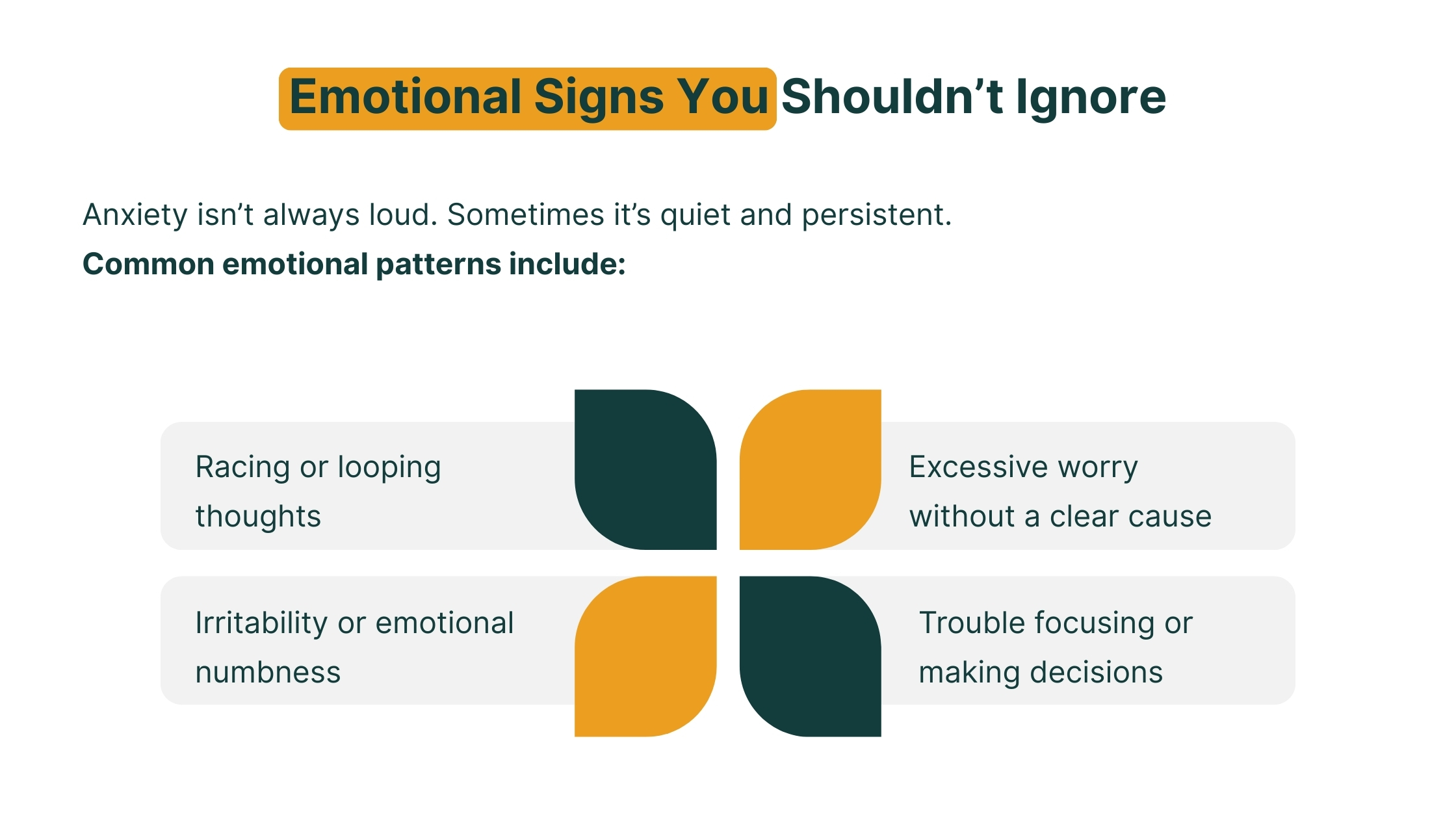
Common emotional and cognitive signs include:
- Racing or looping thoughts
- Constant worry without a clear cause
- Difficulty relaxing, even during calm moments
- Irritability or emotional numbness
- Trouble focusing or making decisions
These anxiety symptoms can gradually reshape how someone moves through their day, affecting relationships, work, and overall quality of life.
When the Body Carries the Stress
For many people, the body speaks before the mind fully understands what is happening.
You may notice:
- Tightness in the chest or shoulders
- Stomach discomfort or nausea
- Headaches or jaw tension
- Ongoing fatigue
- Sleep that never feels restorative
When medical tests come back normal, this can feel frustrating or invalidating. Yet these physical symptoms of anxiety are very real. The body often holds emotional strain long before words are available to describe it.
Anxiety vs Stress: Why the Difference Matters
Understanding anxiety vs stress can help bring clarity.
Stress usually has a clear source. A deadline. A conflict. A temporary demand. Once the situation resolves, the nervous system settles.
Anxiety can persist even when life appears stable. It may feel as though the body is constantly on edge, scanning for danger. Over time, this pattern can point to nervous system dysregulation, where returning to a sense of safety becomes difficult without support.
When Anxiety Starts to Shape Your Life
Ongoing anxiety does more than create discomfort. It can quietly influence how you see yourself and the world.
You might notice:
- Decisions feel heavier than they used to
- Joy feels muted or distant
- Rest feels uncomfortable or undeserved
- You are always bracing for something to go wrong
These are often signs that anxiety is not just about coping skills, but about deeper emotional patterns asking to be understood.
What a Thoughtful Evaluation Can Offer
A mental health evaluation is not about labeling or rushing to conclusions. When done with care, it creates space to explore emotional history, current stressors, and how symptoms are affecting daily life.
It allows for reflection without pressure and opens the door to understanding rather than self judgment.
Care That Meets You Where You Are
Many people worry that seeking help means being placed into a rigid treatment structure. In a patient centered practice, care is collaborative and flexible.
An individualized treatment plan may include:
- Psychotherapy for support and insight
- Medication management when appropriate
- Deeper psychoanalytic work for long standing patterns
The goal is not to silence feelings, but to understand them in context.
Dr. Barbara Fontane’s work reflects this philosophy. With more than twenty years of experience in psychiatry and psychoanalysis, she supports patients who are ready to move beyond surface relief. Her approach emphasizes curiosity, safety, and long term emotional growth, always shaped around the person rather than a checklist of symptoms.
Knowing When It’s Time to Reach Out
Understanding when to seek help for anxiety often begins with noticing impact rather than intensity.
It may be time to consider support if:
- Anxiety interferes with work, relationships, or sleep
- Physical discomfort has no clear medical explanation
- Coping strategies that once helped no longer work
- You feel stuck in patterns you cannot explain
These moments are signals, not failures.
Moving Toward Understanding and Relief
Healing is not instant. It unfolds through insight, consistency, and a therapeutic relationship built on trust. Anxiety that has been present for months or years rarely disappears on its own. But with the right support, it can become understandable, manageable, and less overwhelming.
If anxiety feels less like a passing season and more like a constant companion, professional care can offer a place to slow down, reflect, and begin addressing what has been asking for attention all along.